Plan your next piece
Biomech tattoos: ideas, placement & planning
What is a biomechanical tattoo?
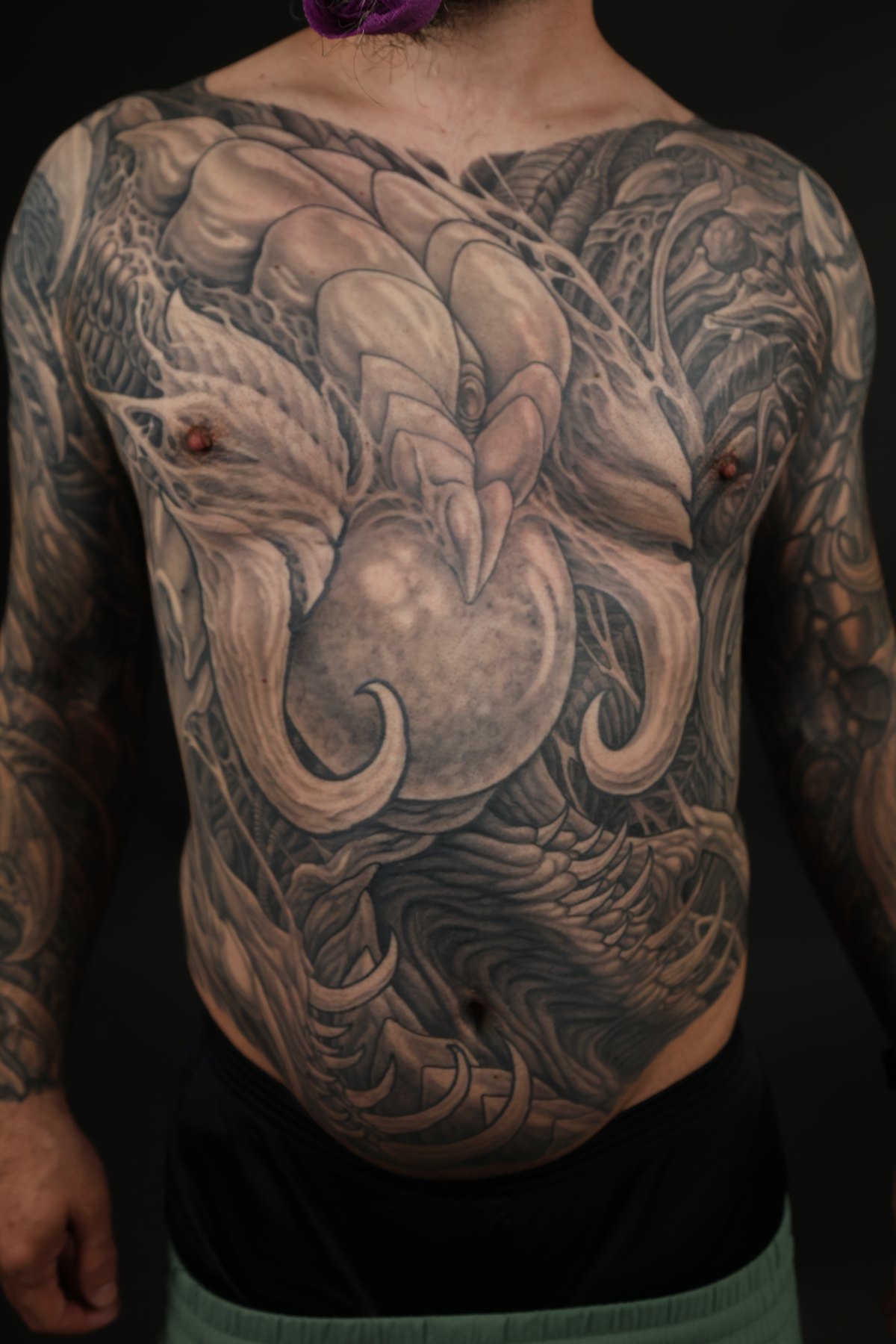
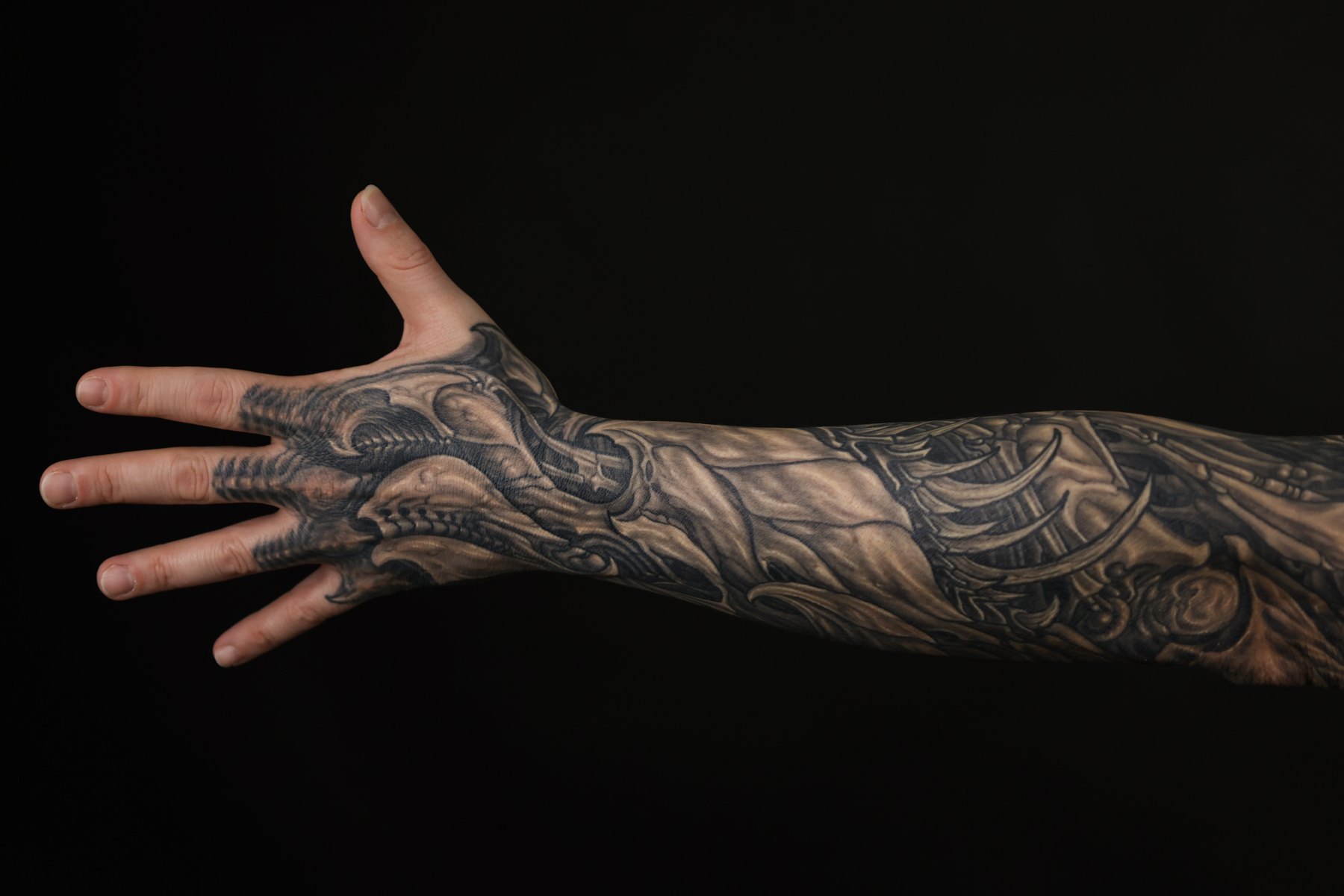
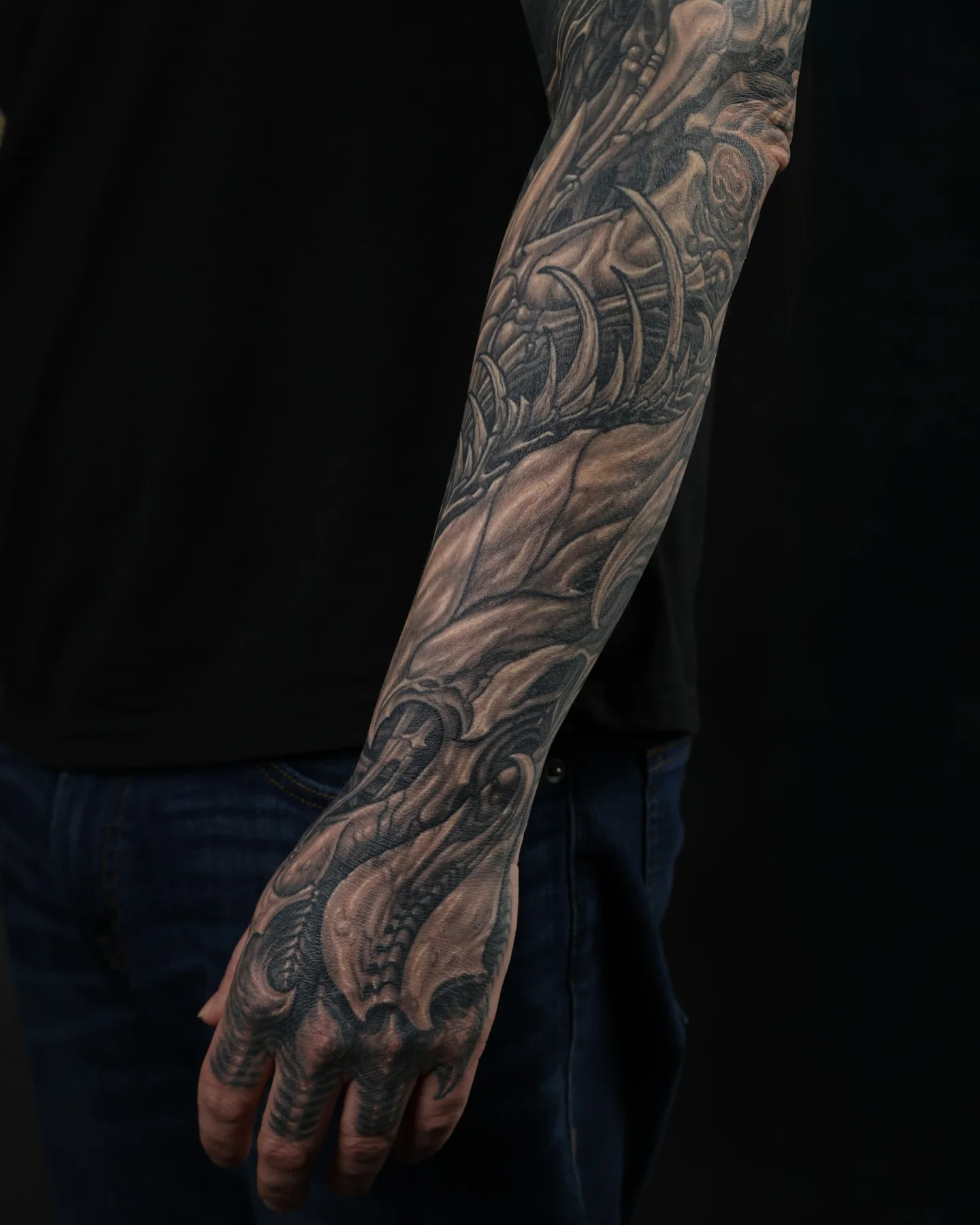
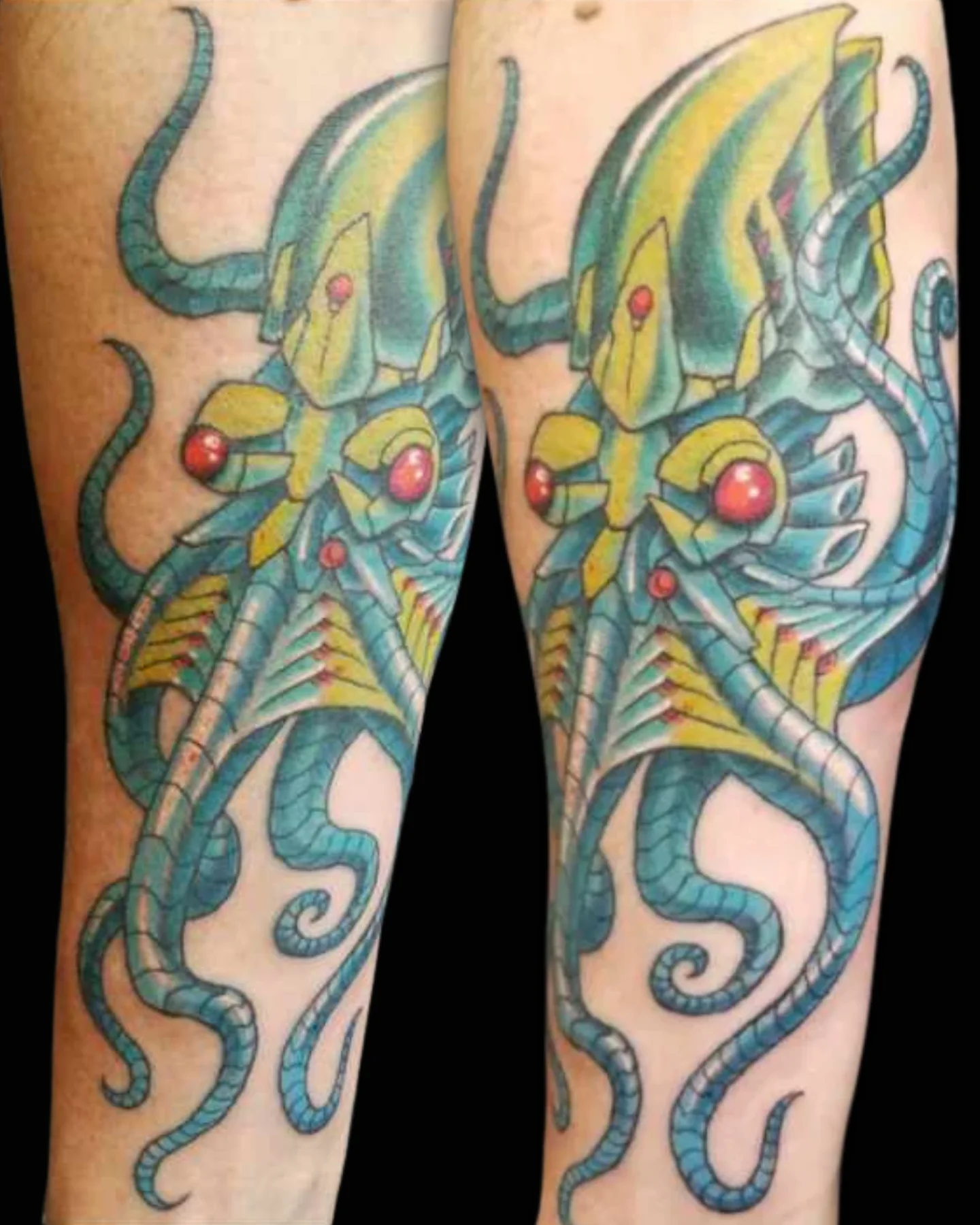
Biomechanical tattooing imagines machinery and living forms as parts of the same structure. Layered shapes, recessed shadows and highlights can suggest something beneath the surface of the skin. Some concepts lean toward mechanical components; others feel more skeletal, organic or otherworldly. The goal is not simply to add gears to a drawing. The relationship between the forms and the body gives the piece its sense of movement and depth.
Biomech and bioorganic: choose the feeling first
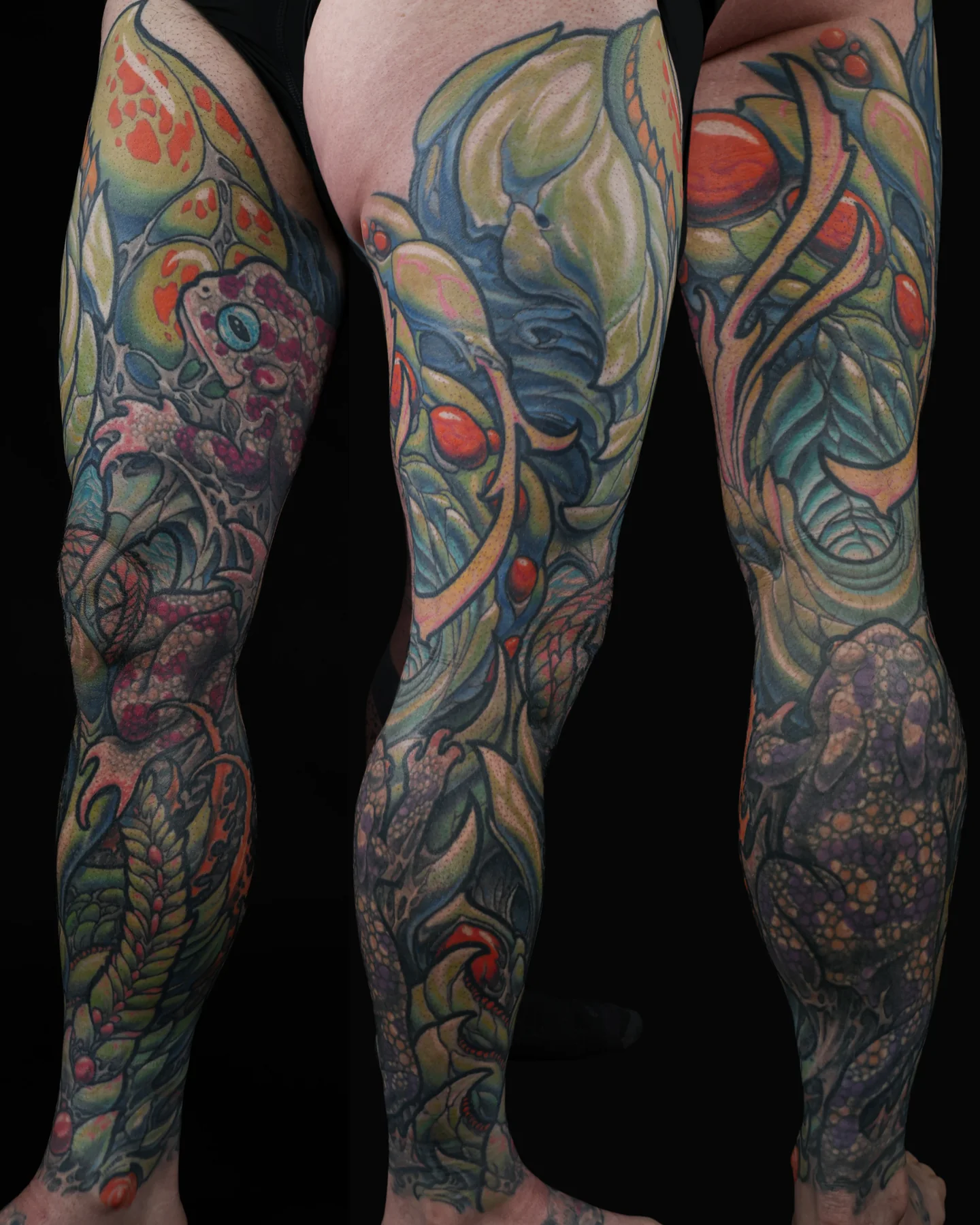
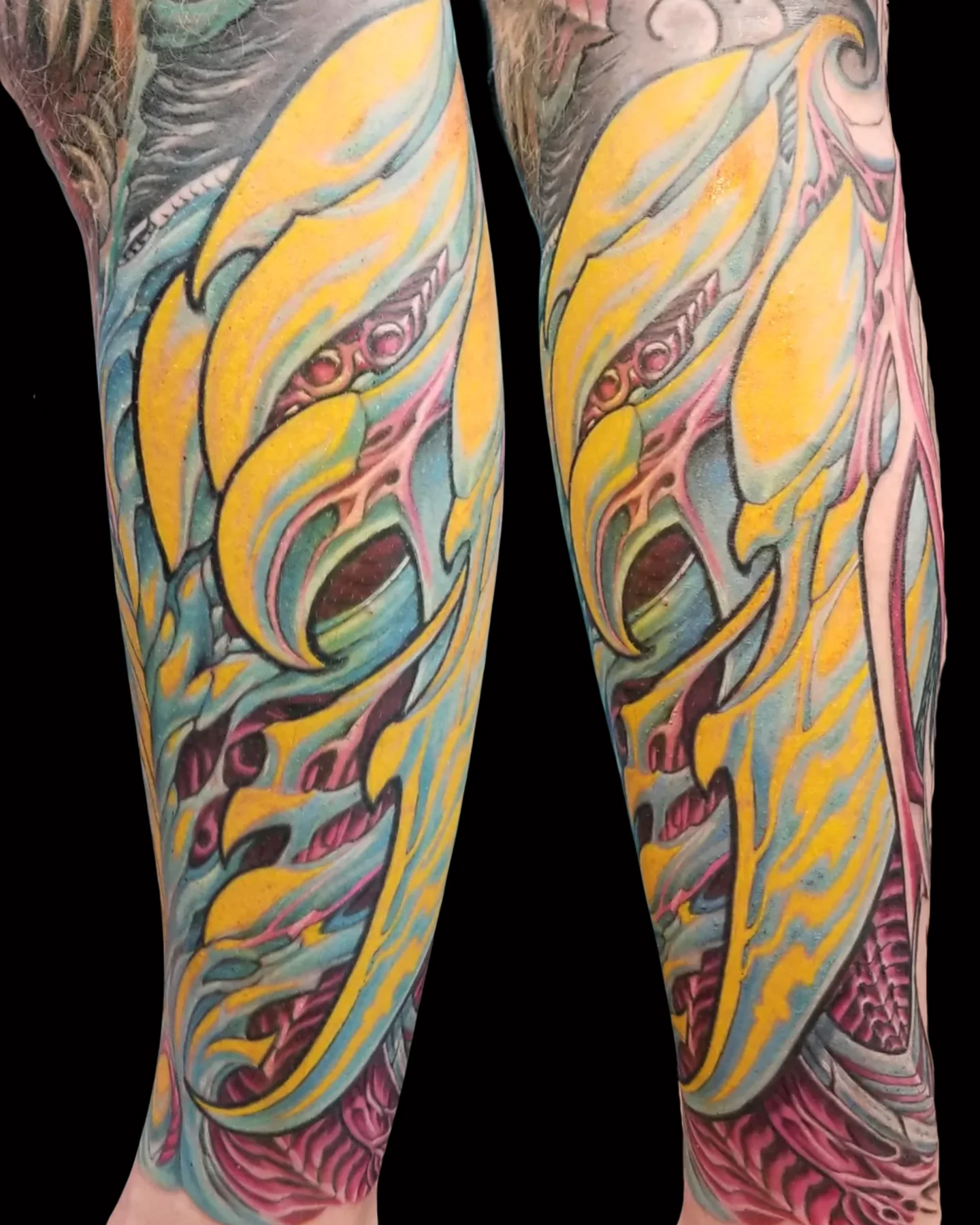
Mechanical-looking forms can feel rigid, engineered or metallic. Bioorganic ideas lean toward flowing structures that suggest bone, tissue or unfamiliar natural growth. These directions can overlap within one project. Instead of arriving with a fixed list of parts, describe the atmosphere you want: dark and heavy, fluid and alien, or bright and dimensional. A small group of references with notes is more useful than dozens of unrelated images.
Design for anatomy and future expansion
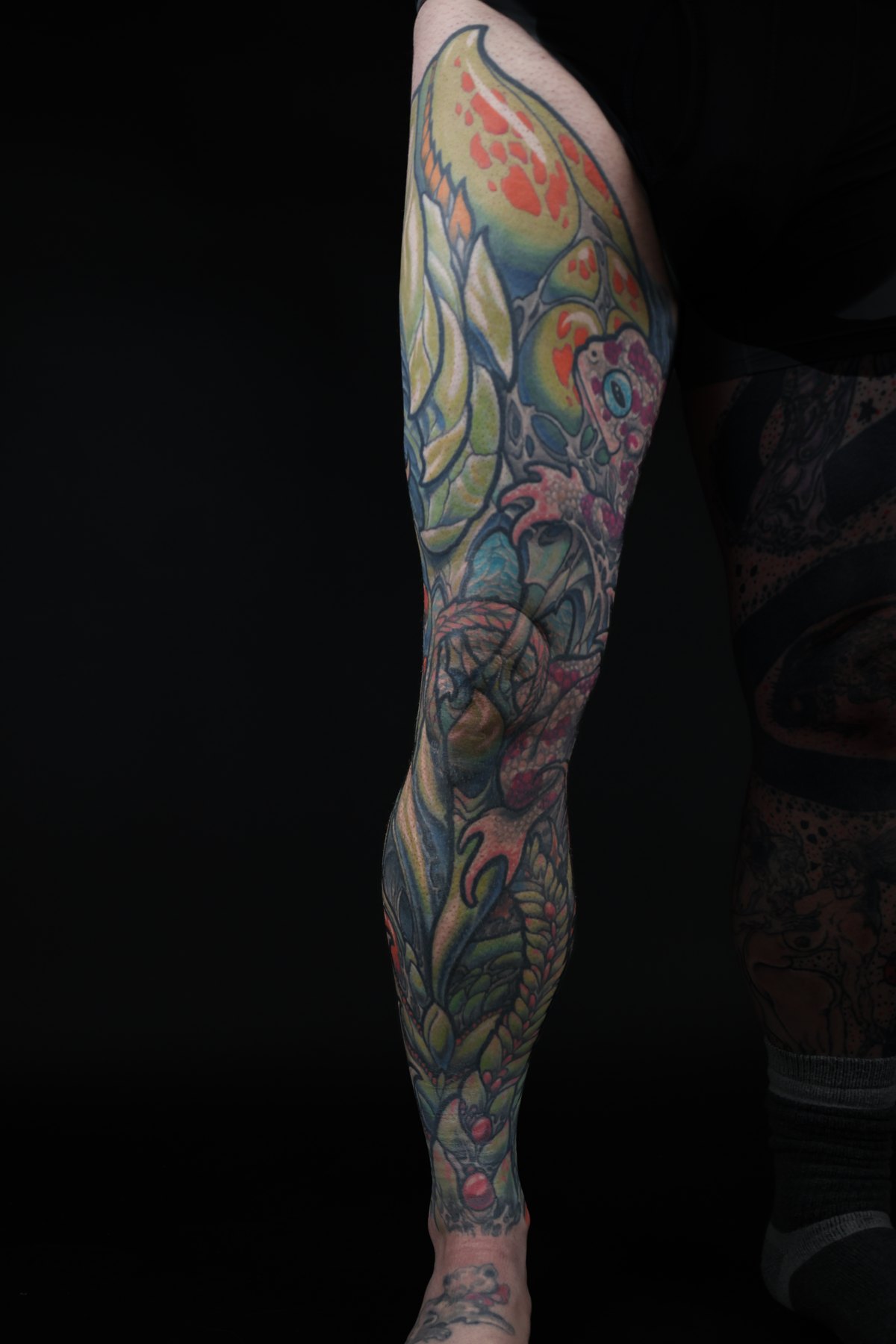
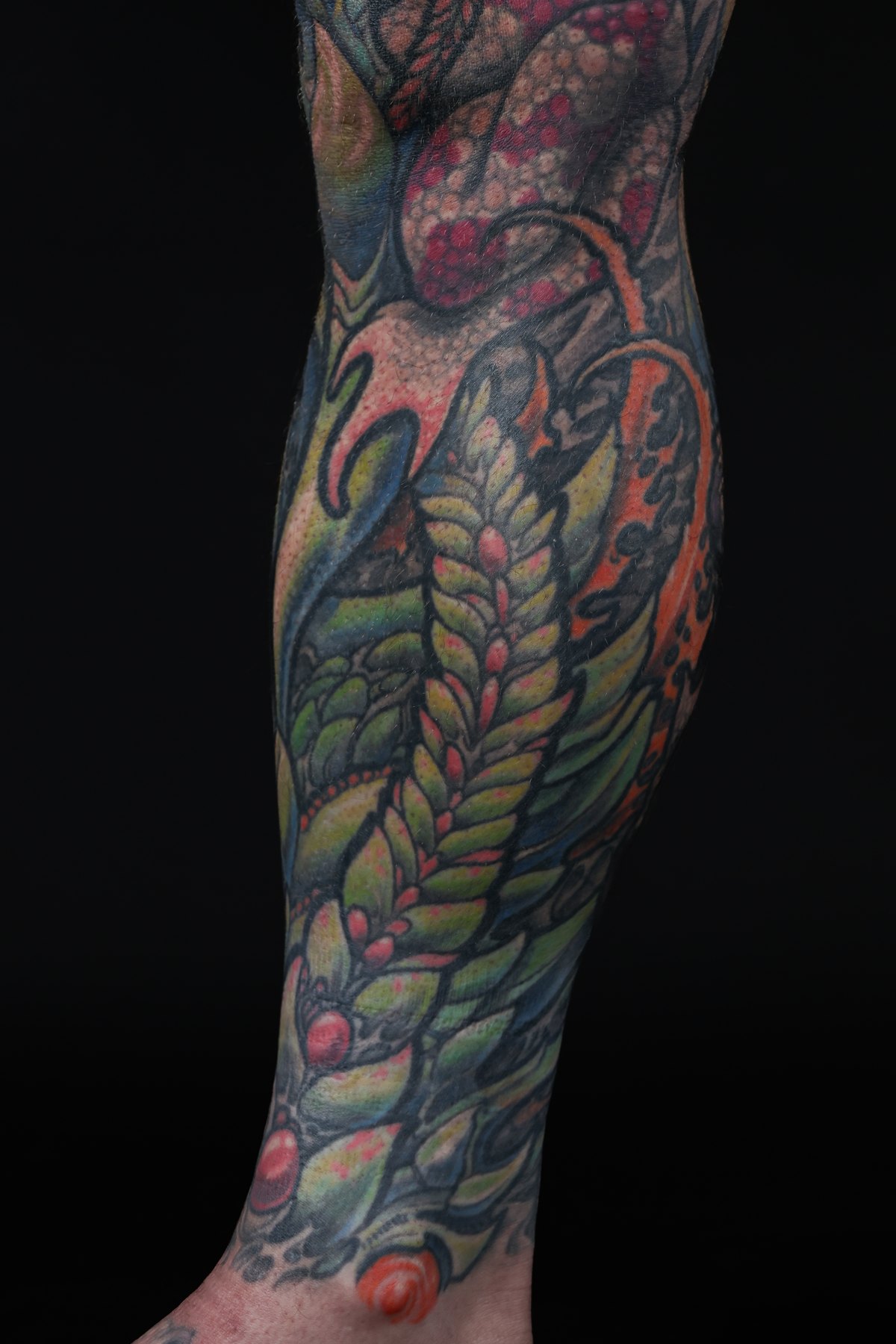
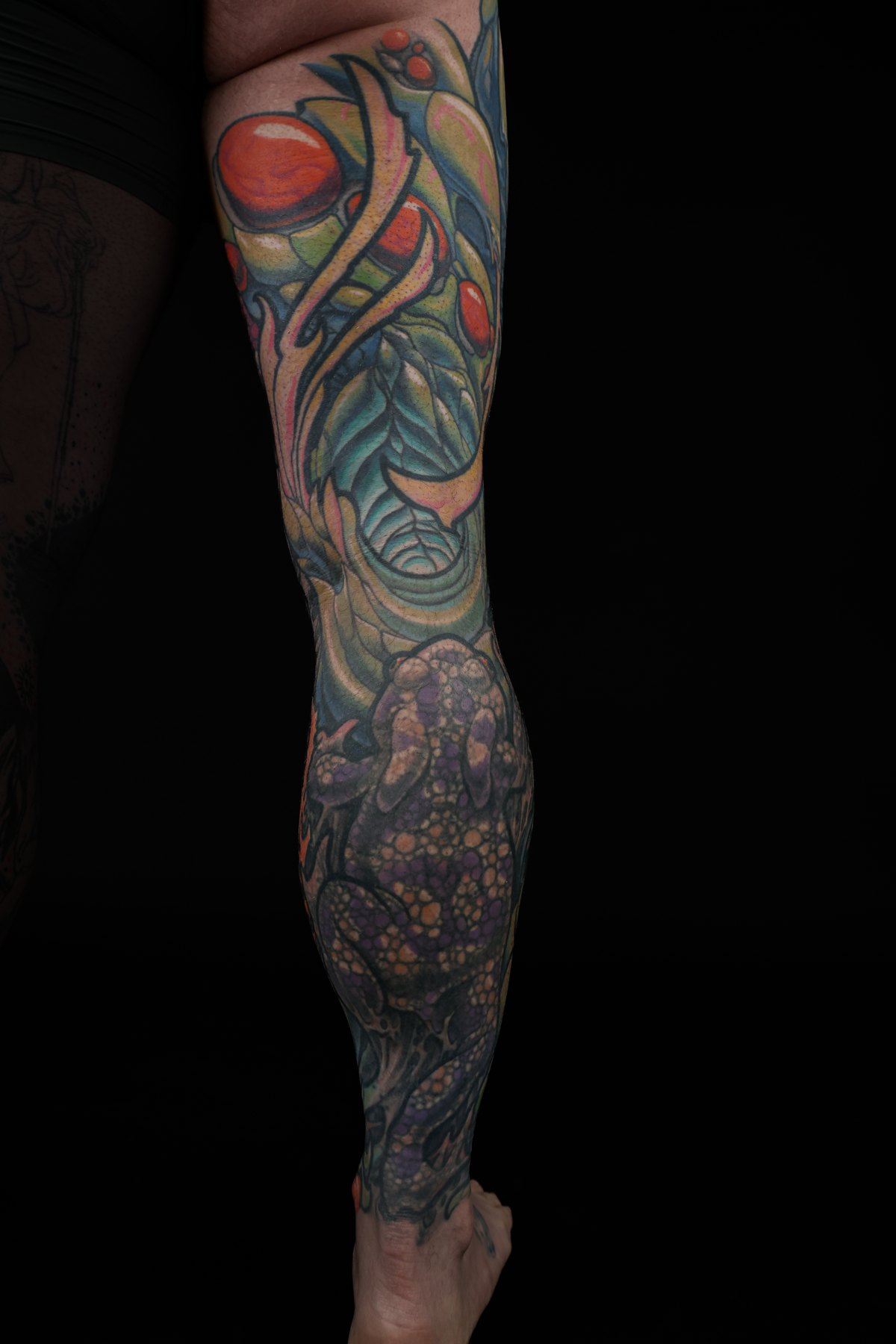
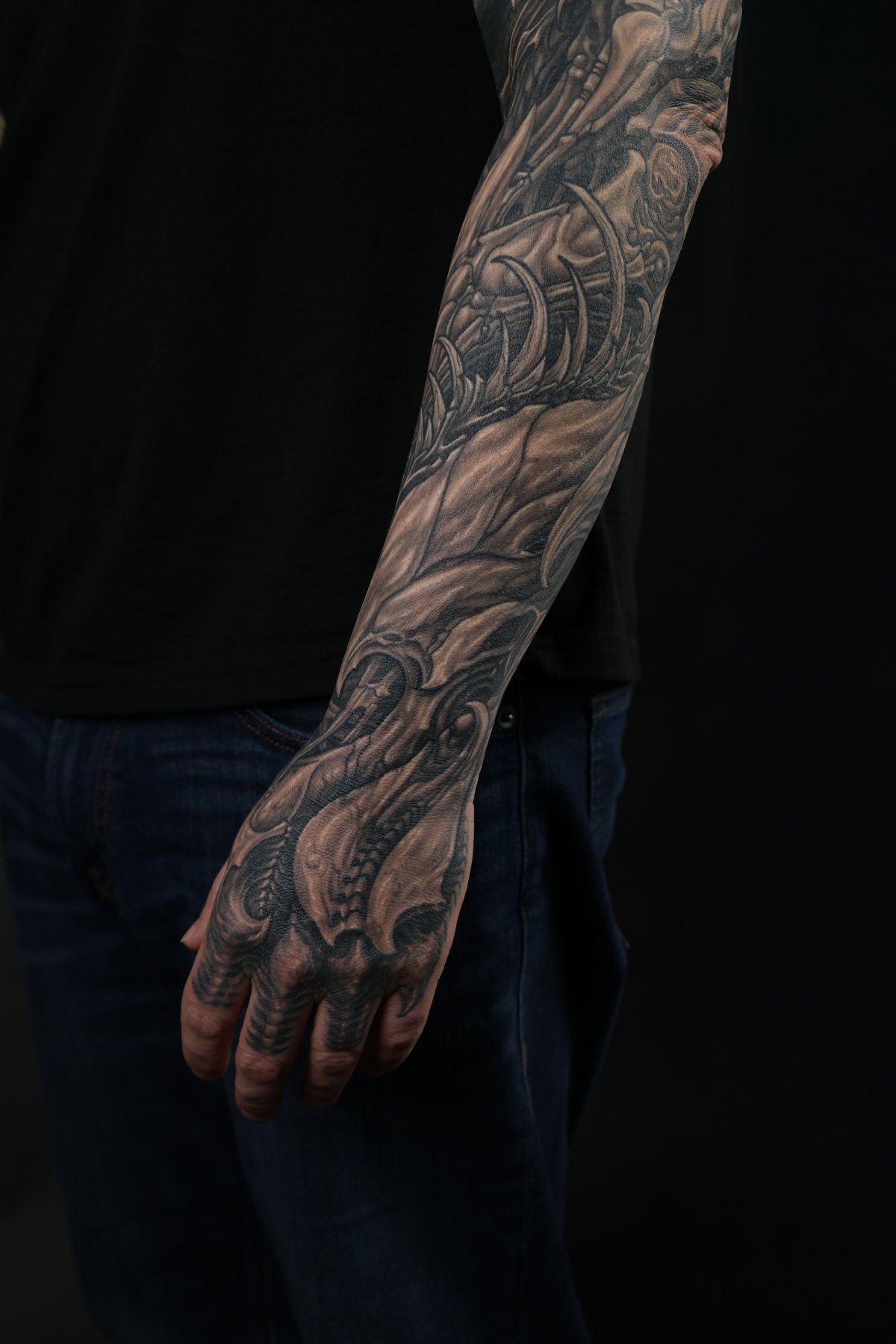
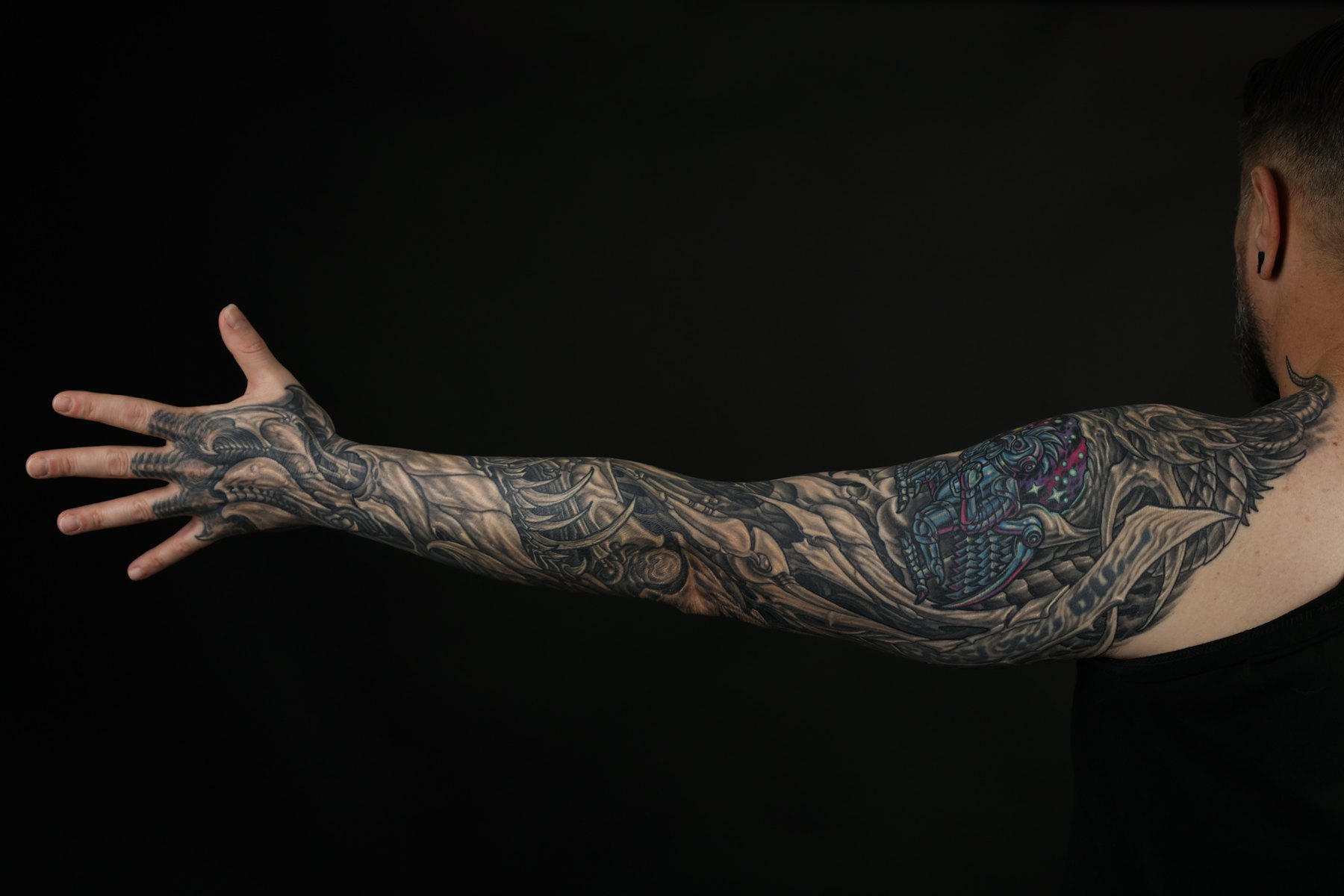
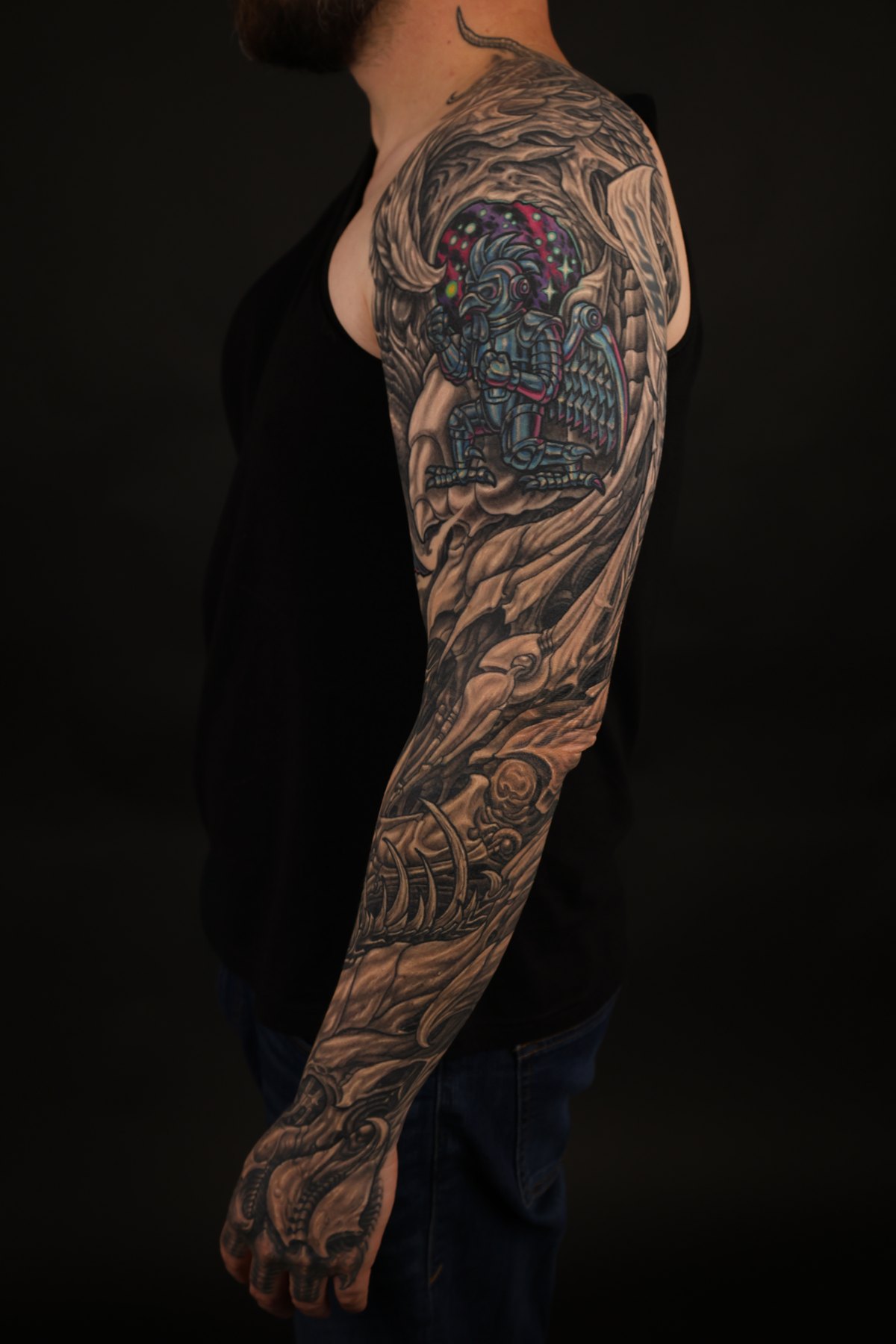
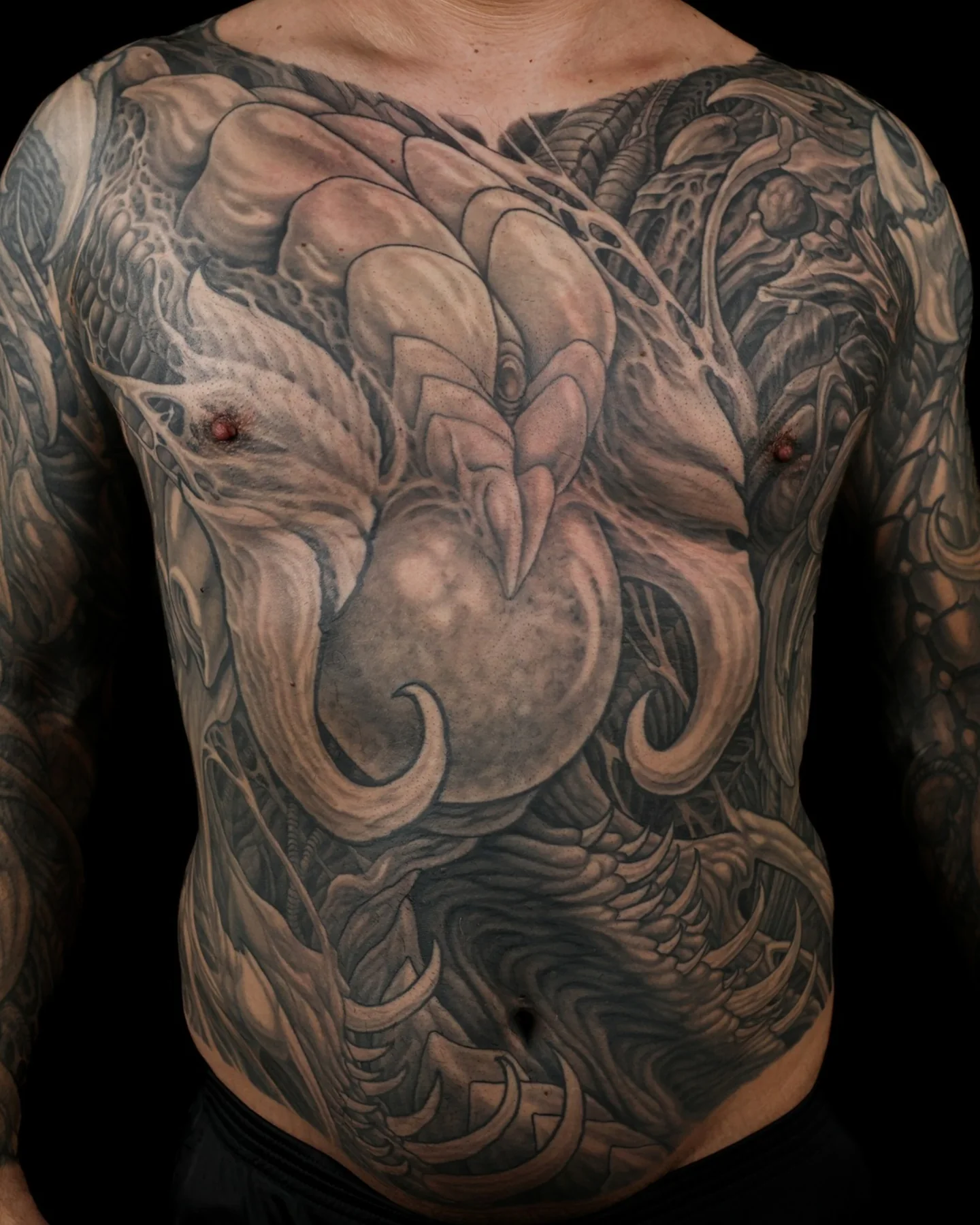
An arm, shoulder, thigh or back gives a biomech composition different opportunities. The artist can use the area’s curves to guide the major forms and choose where the visual depth should be strongest. If you want a sleeve, say whether it should stop at the wrist, connect to the chest or eventually extend further. Existing tattoos also need to be part of that discussion. Planning the edges and transitions early helps the design feel intentional as the project grows.
Explore Josh Standley’s biomech work
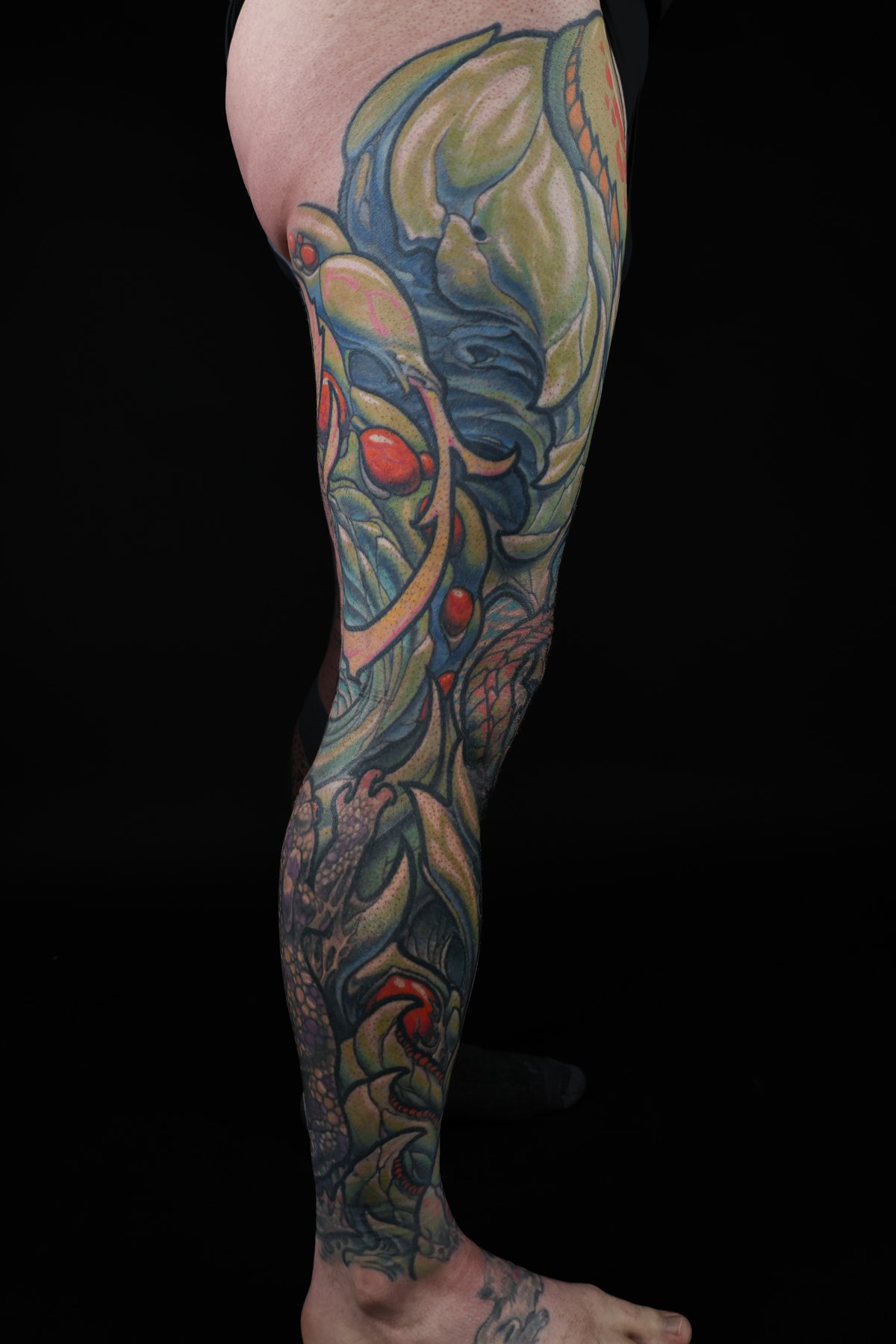
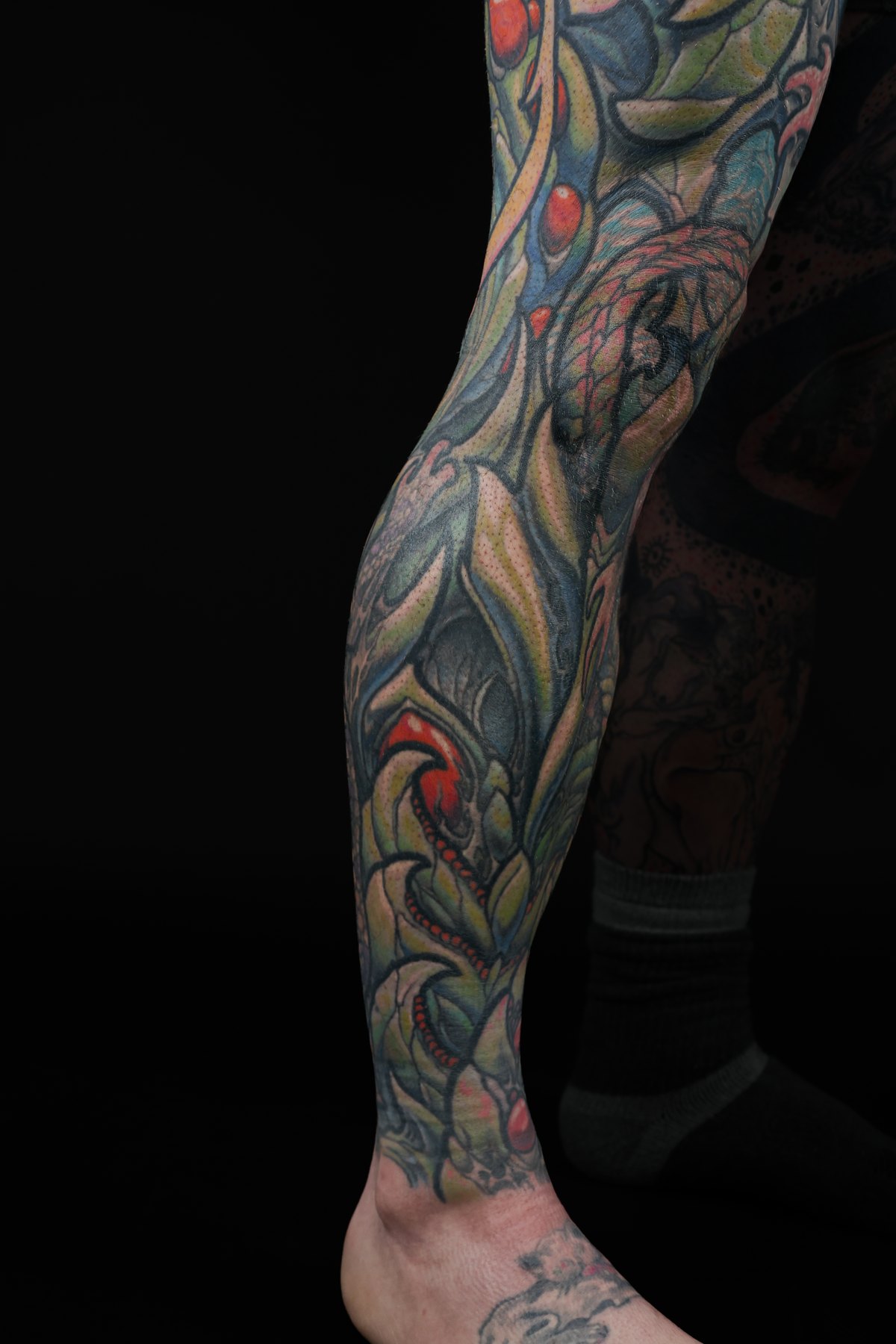
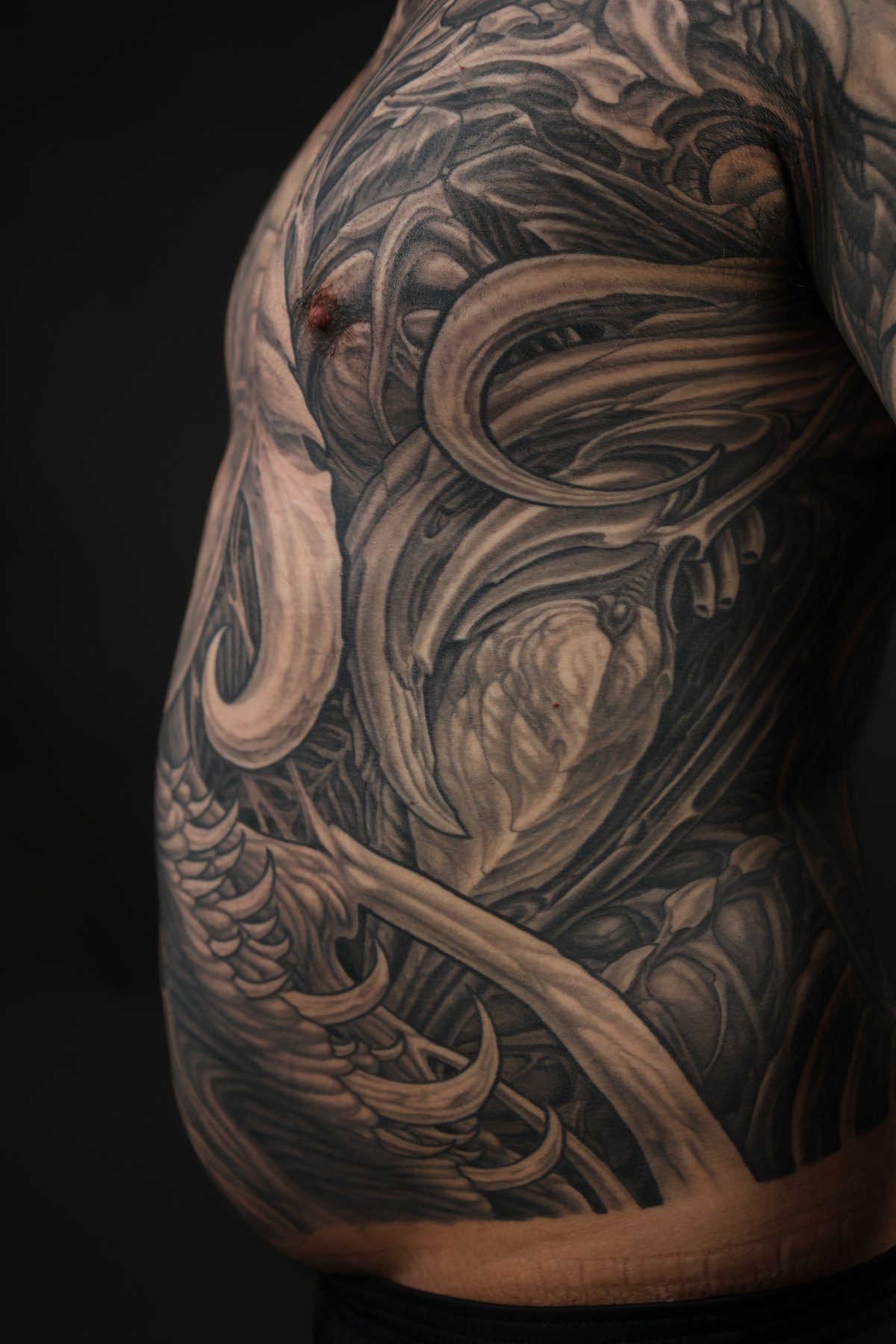
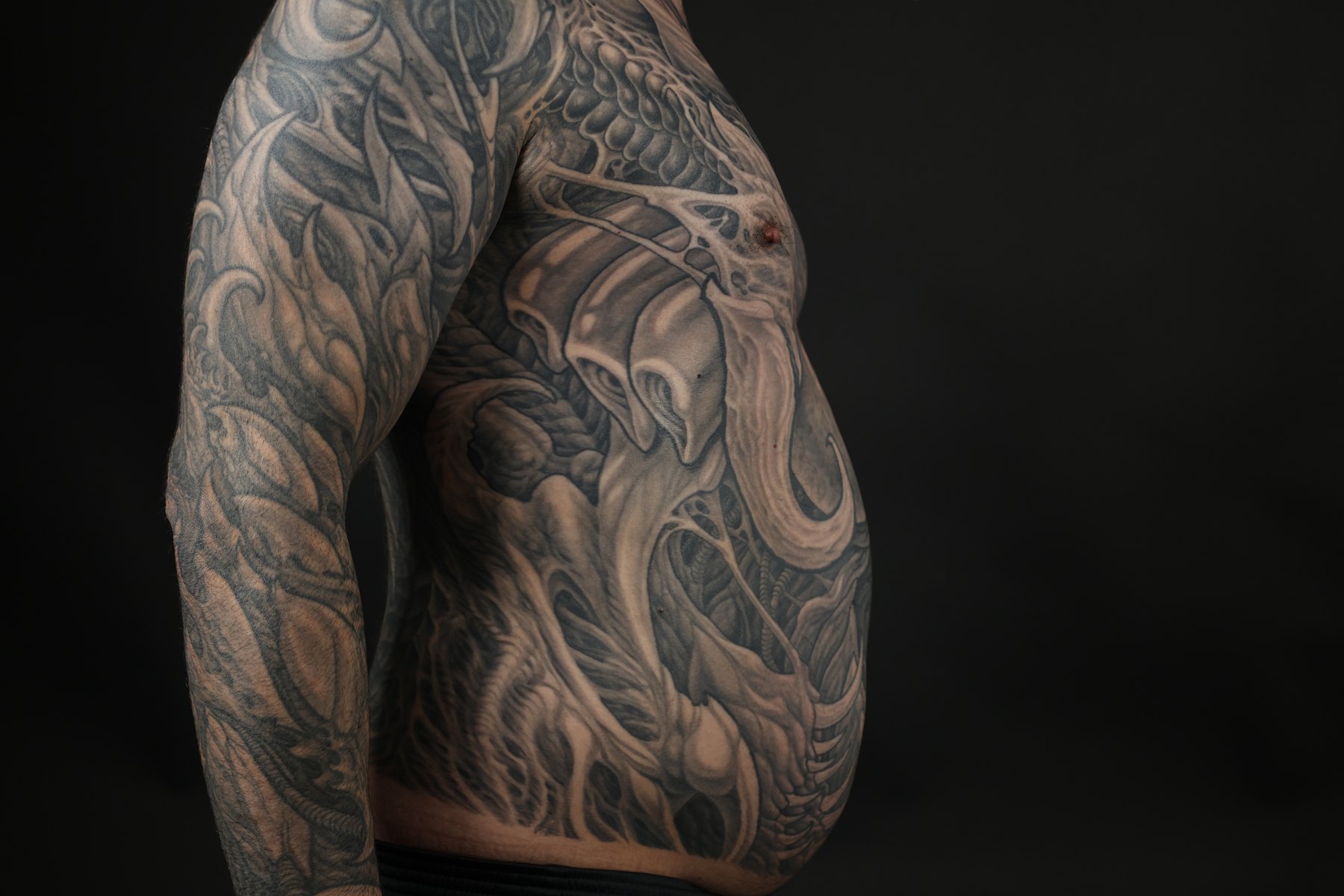
The work in this gallery is credited to Josh Standley, whose Element portfolio includes color and black and grey biomech. Compare how the light and dark areas create layers before deciding on a palette. For a monochrome direction, also browse black and grey tattoos. Bring a photo of your planned placement to the consultation so the conversation can move from a flat reference toward a design for your body.
Your questions, answered
Does biomech have to include torn skin or exposed gears?
No. Those are possible visual devices, not requirements. The design can suggest depth through overlapping forms and lighting without depicting an opening in the skin.
Can biomech be done in color?
Yes. Josh’s work includes both color and black and grey approaches. Discuss whether the palette should suggest metal, organic material or a more imaginative environment.
Can I start small and build a sleeve later?
Discuss the full intention before starting. A standalone piece can have a different structure from the first stage of a continuous sleeve. Your artist can help plan a starting area that makes sense for the larger idea.