Plan your next piece
Black & Grey tattoos: ideas, placement & planning
One palette, many ways to tattoo
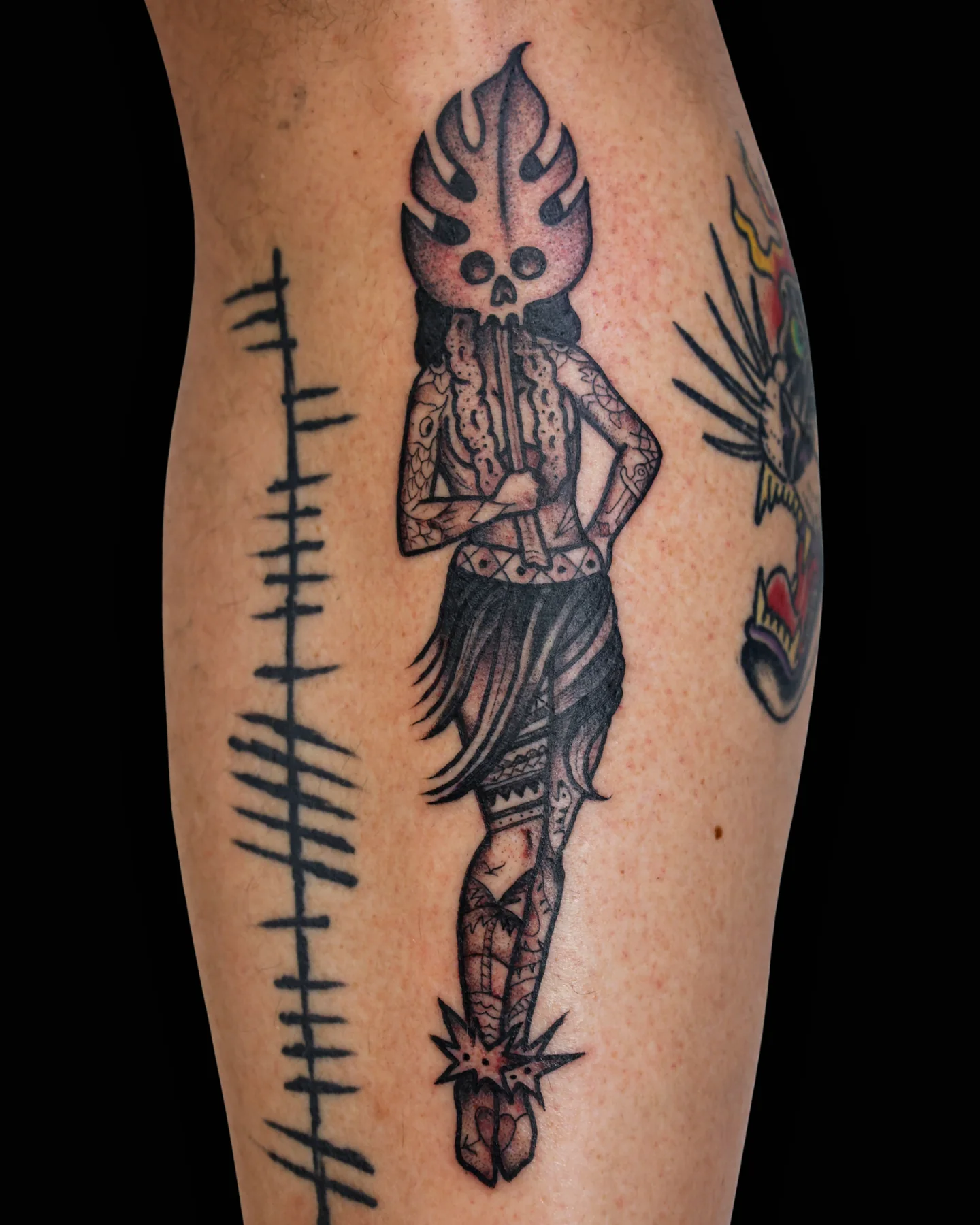
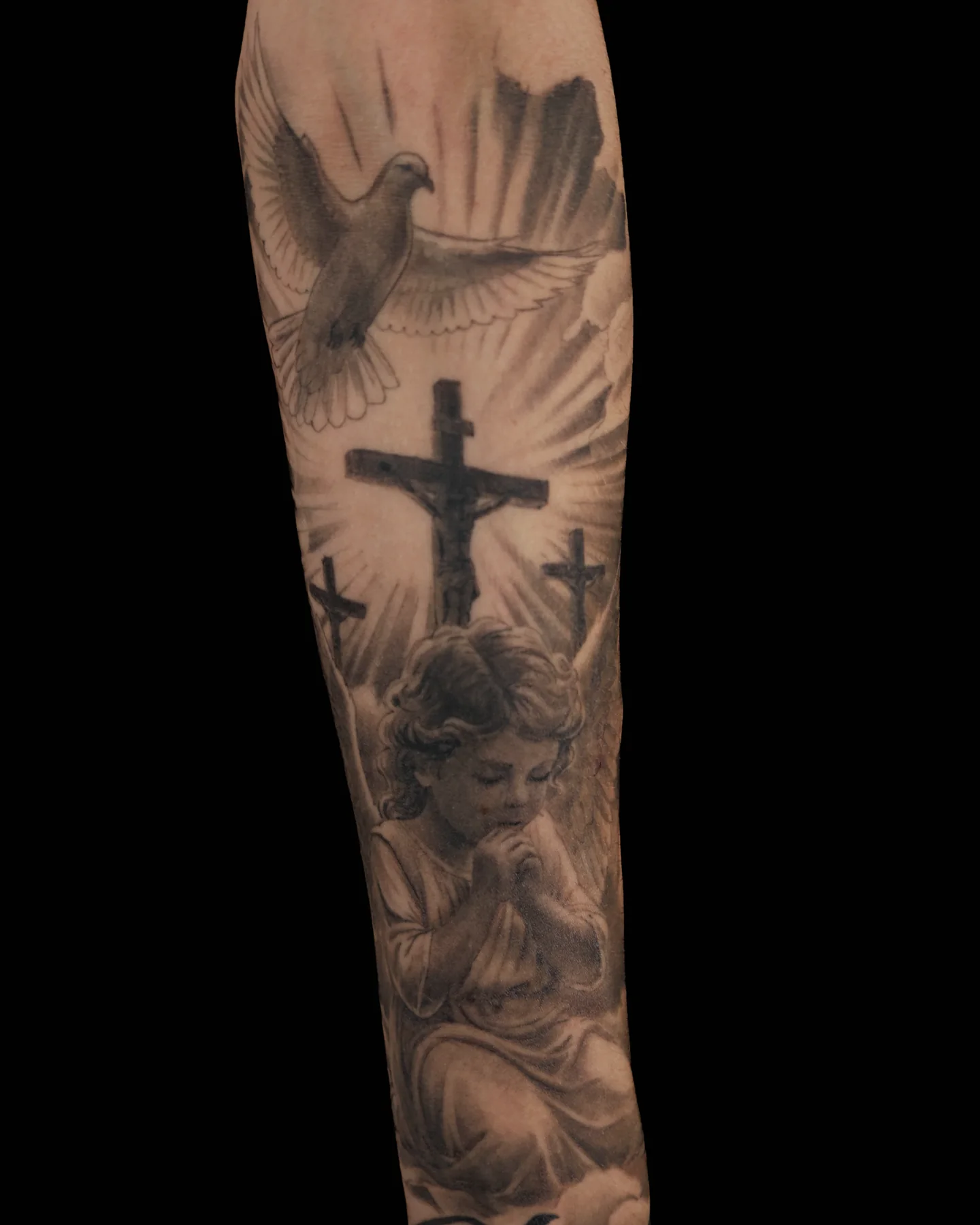
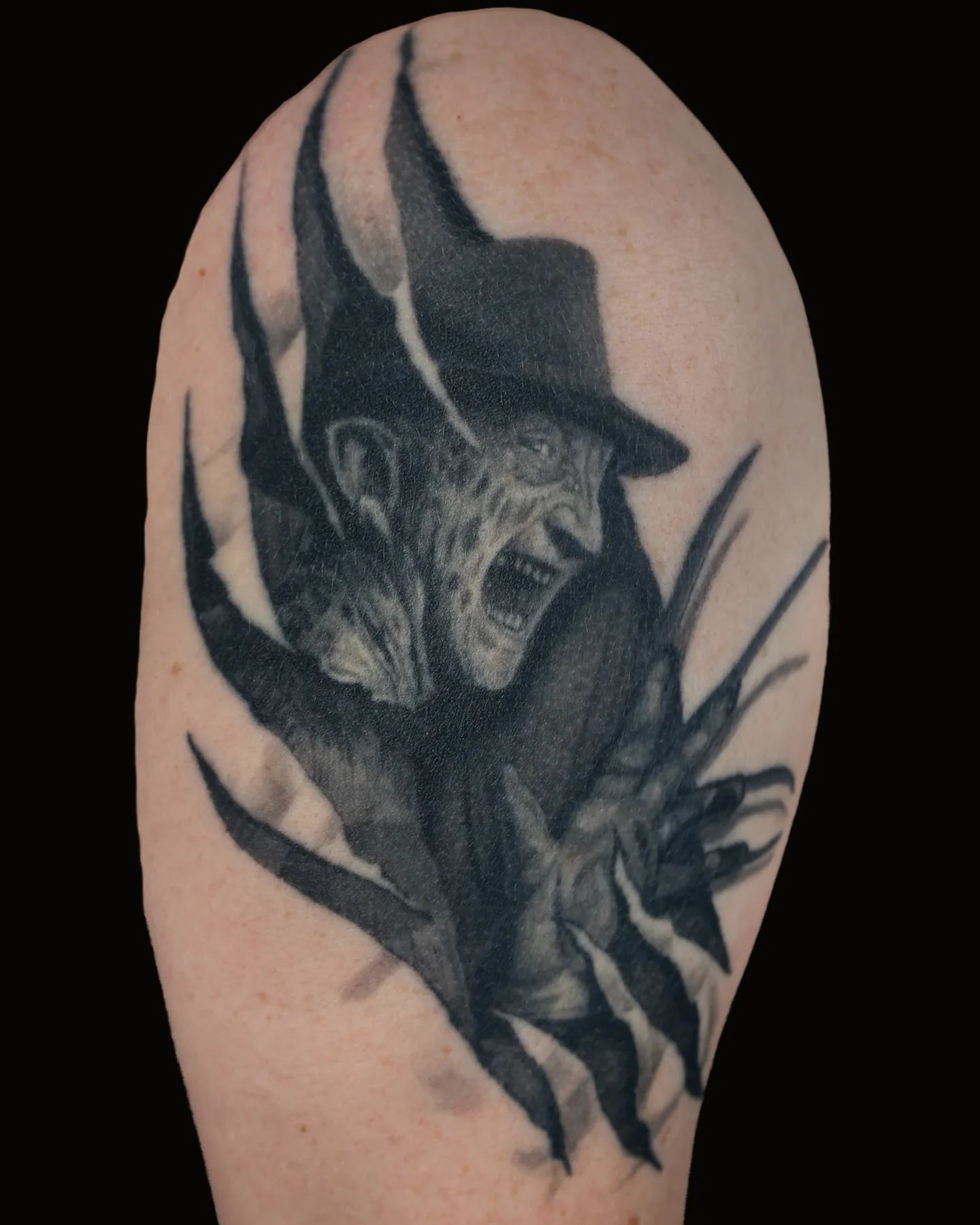
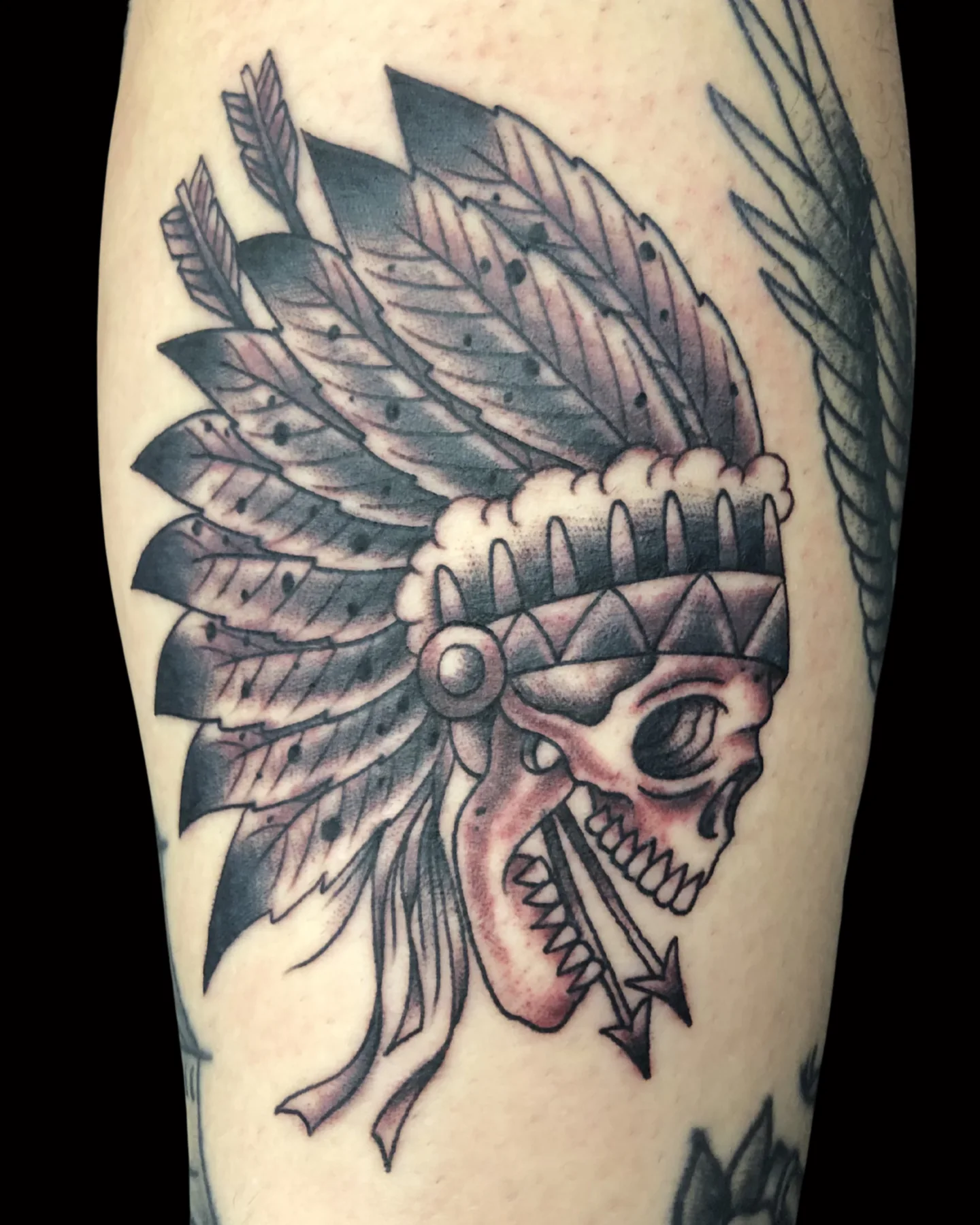
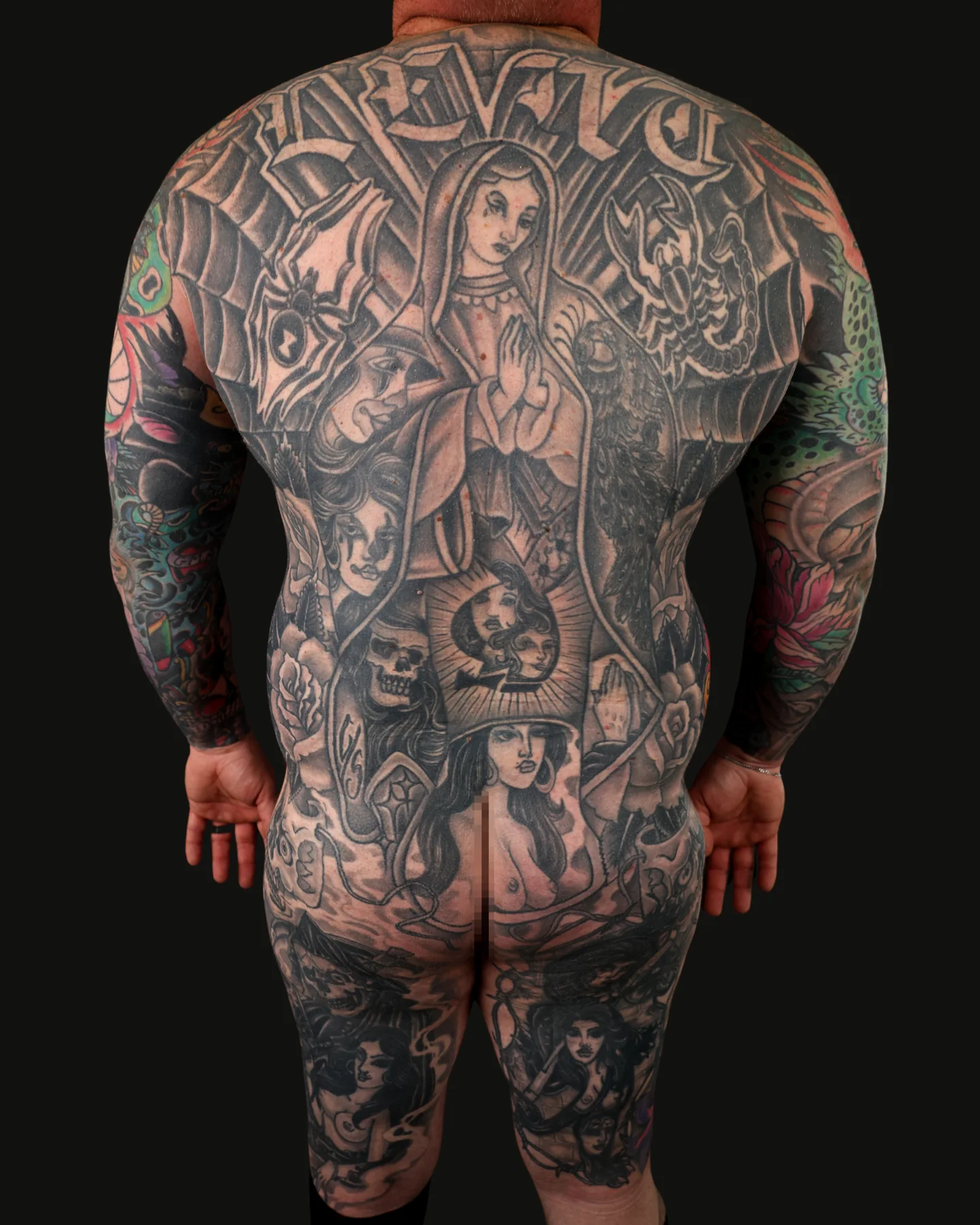
Black and grey describes a tonal approach rather than one subject or drawing style. A realistic portrait, a bold traditional animal and an illustrative skull can all use black and grey while looking very different. Dark areas give the image weight, softer tones describe form, and uninked space gives the eye somewhere to rest. When collecting references, notice whether you are drawn to soft transitions, strong outlines, dramatic shadows or a combination.
Contrast gives the design its structure
A successful concept needs a clear focal point. For a face, that might be the eyes and expression; for a skeleton sleeve, it might be the way larger forms connect down the arm. Ask how the subject will read from a normal viewing distance, not just in a close-up photo. A drawing with many equally dark elements can become visually busy. Your artist can help separate the main subject from supporting textures and background.
Compare the work before choosing your artist
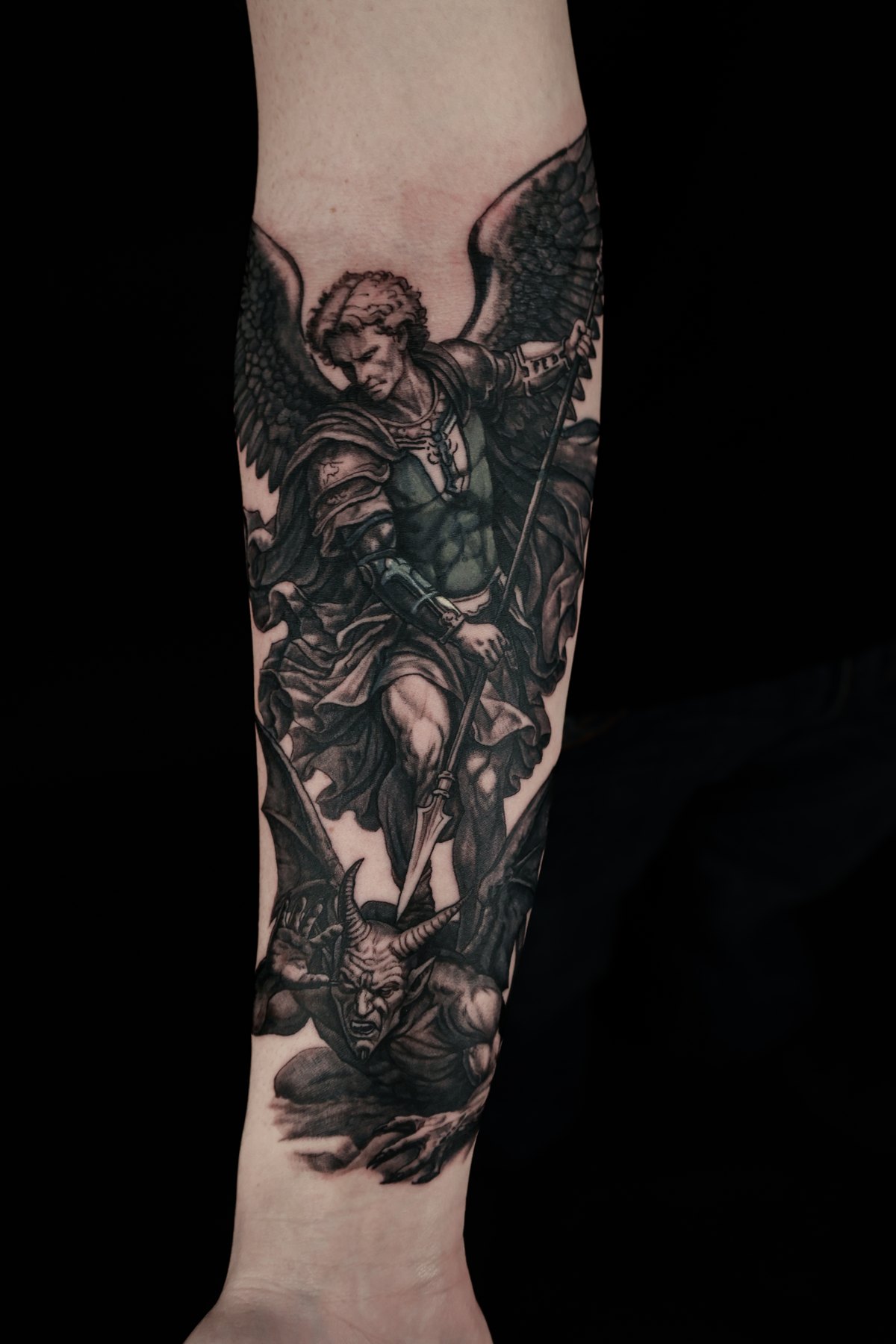
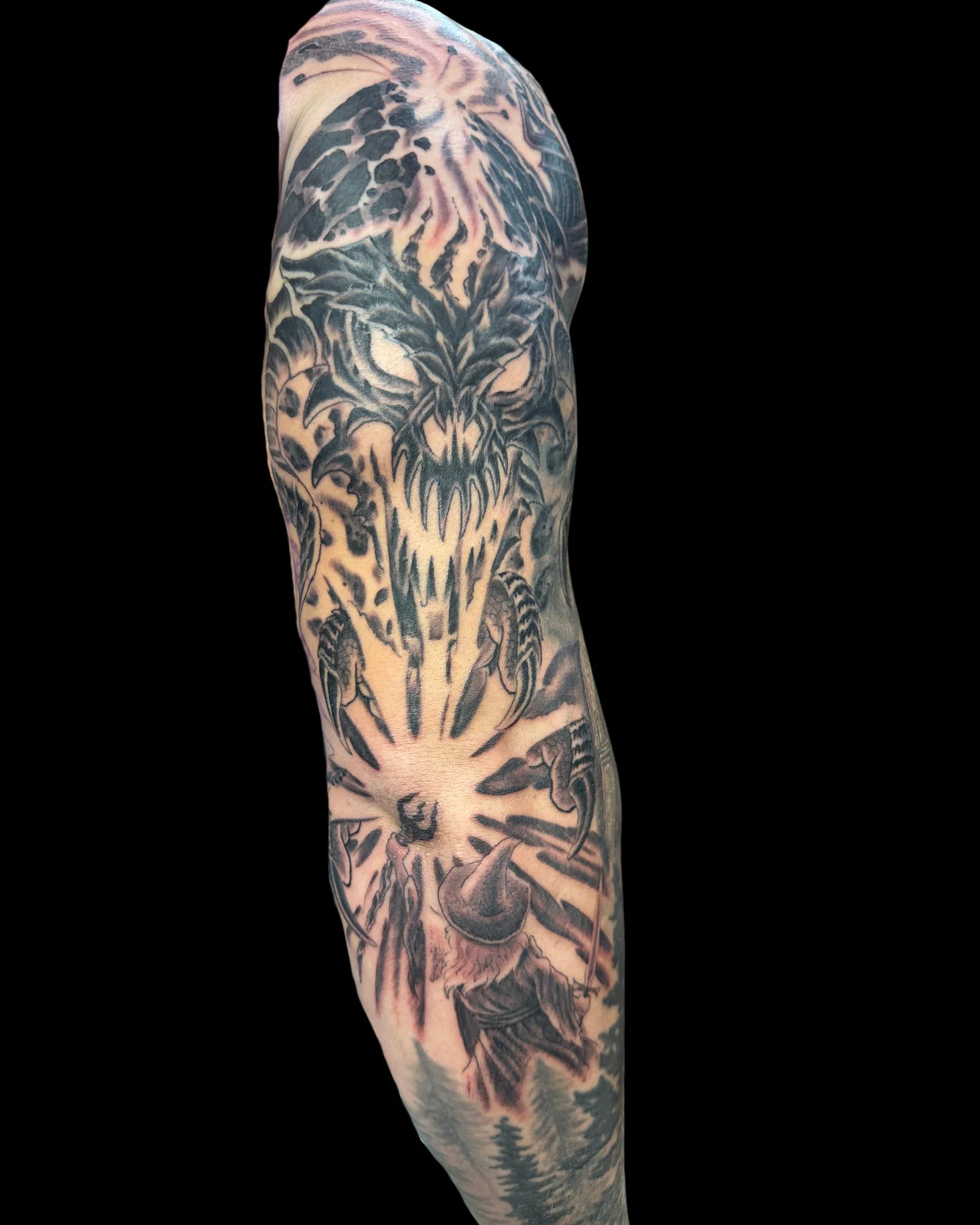
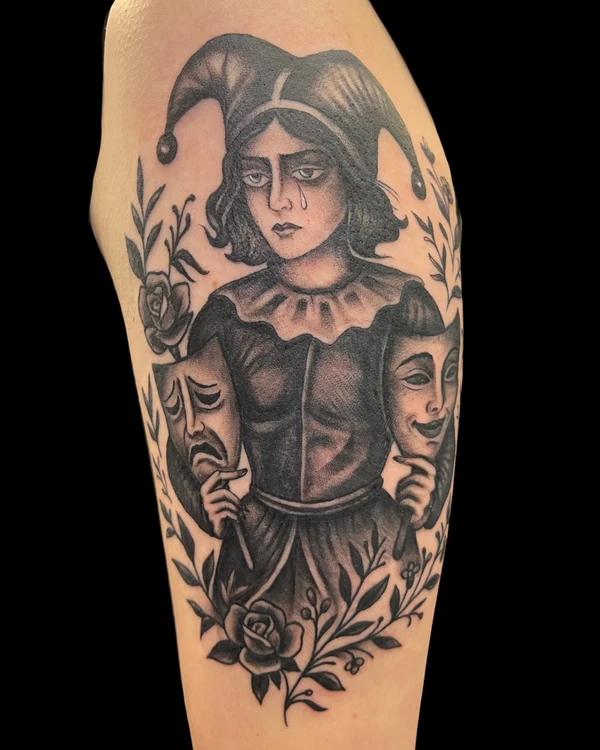
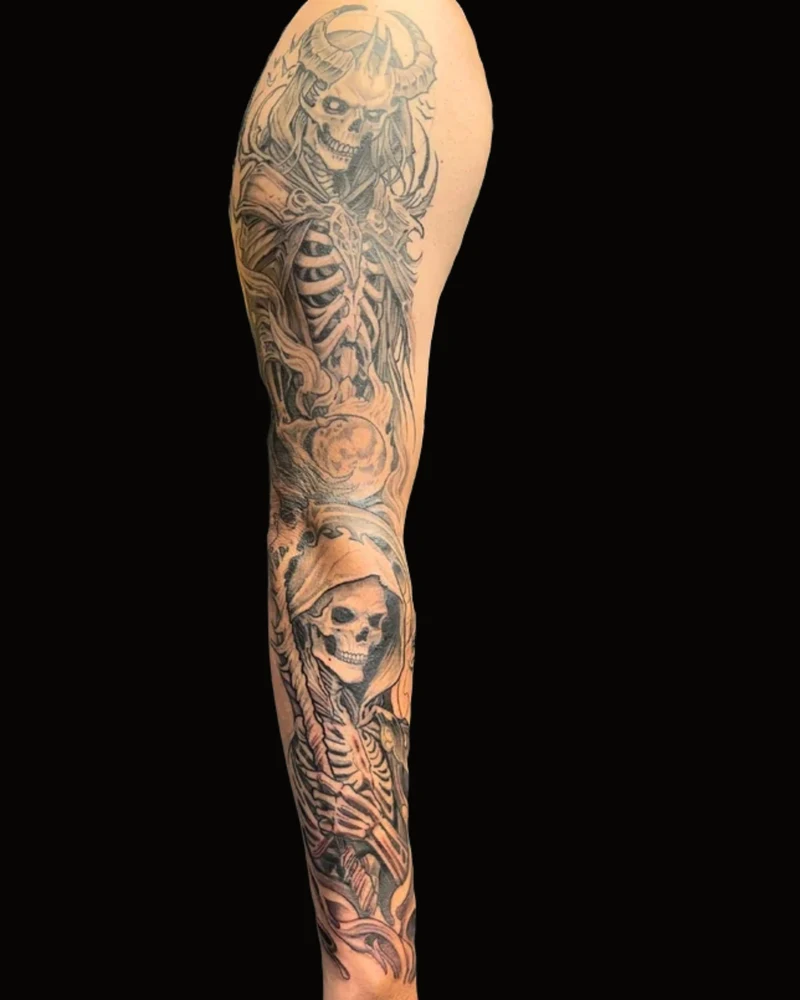
Our gallery includes Brian Pittman’s skeleton work, Justin Martinez’s jester with theater masks, and Angel Serda’s skull sleeve. These examples offer very different treatments of a shared palette. Use the artist credits to explore more work and choose the approach you connect with. If an accurate likeness or naturalistic detail is the priority, visit the realism gallery as well.
Plan a single piece or the whole sleeve
Bring the full area into the conversation, including tattoos that must remain visible. For a sleeve, decide whether you want separate images or a continuous composition before filling the easiest empty spaces. Background, transitions and open skin should be planned with the subjects. You do not need every detail resolved before contacting us, but knowing the intended endpoint helps your artist recommend a sensible first step.
Your questions, answered
Is black and grey the same as realism?
No. Realism describes how lifelike the image looks; black and grey describes its palette. You can choose realistic work in color or black and grey, and many black and grey tattoos are intentionally graphic or illustrative.
Can black and grey cover an existing tattoo?
That requires an individual assessment. The existing ink, its darkness, placement and the proposed design all affect what is possible. Send a clear photo of the old tattoo before planning a cover-up.
Will my project take more than one session?
A small piece and a detailed sleeve have different demands. Size, density and the amount of background influence the plan. Your artist can discuss session structure after seeing the concept and placement.