Plan your next piece
Japanese tattoos: ideas, placement & planning
A composition that moves with the body
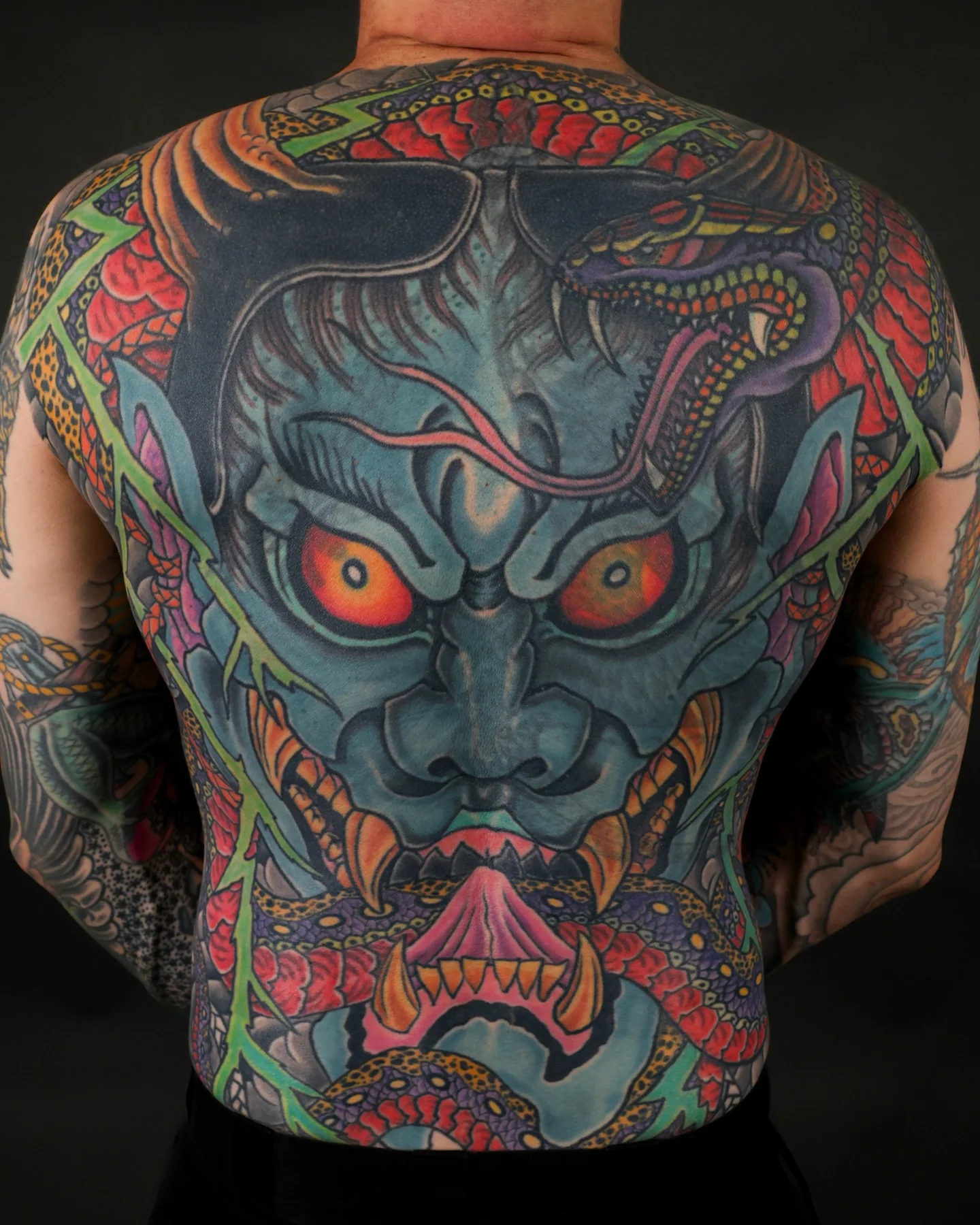
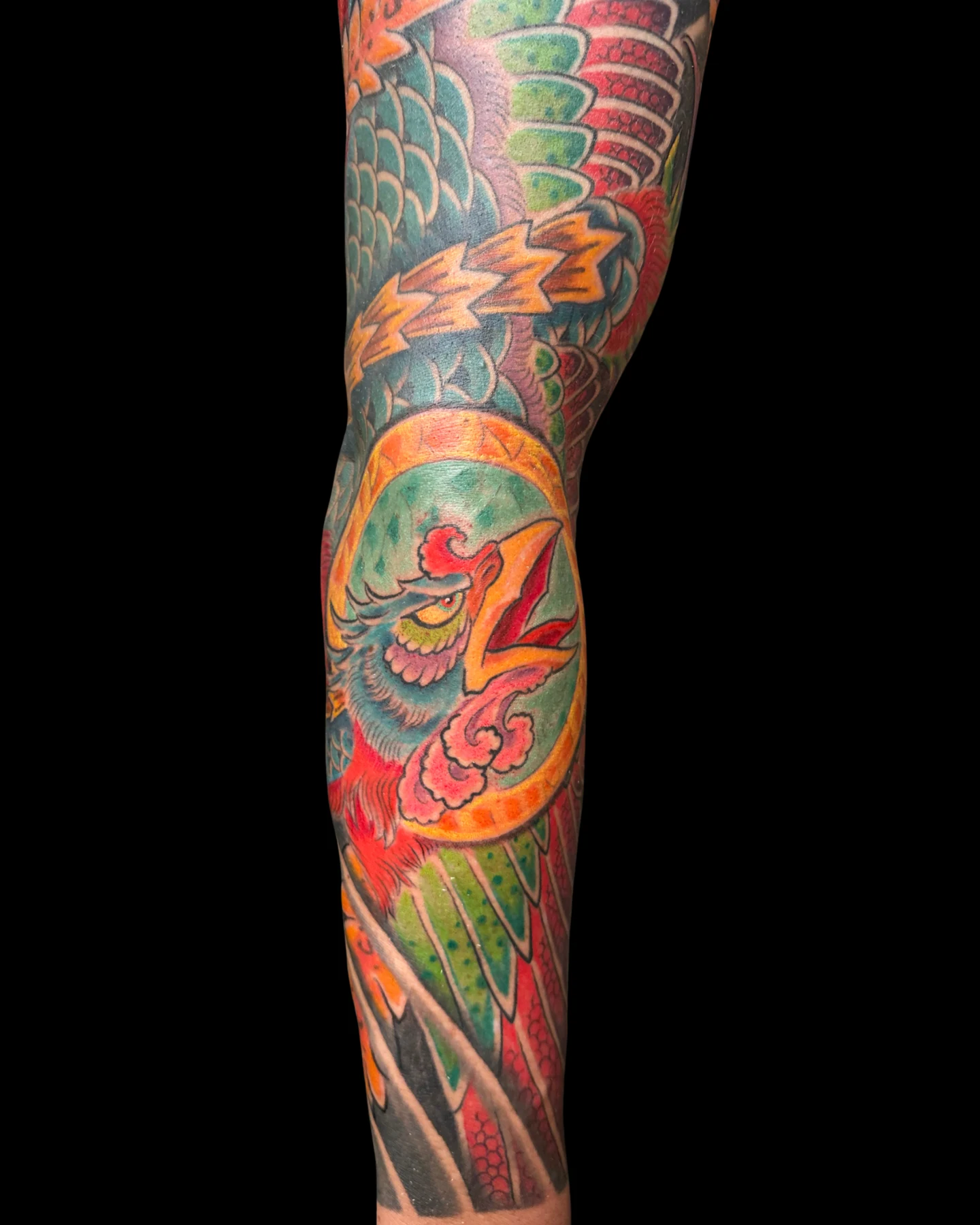
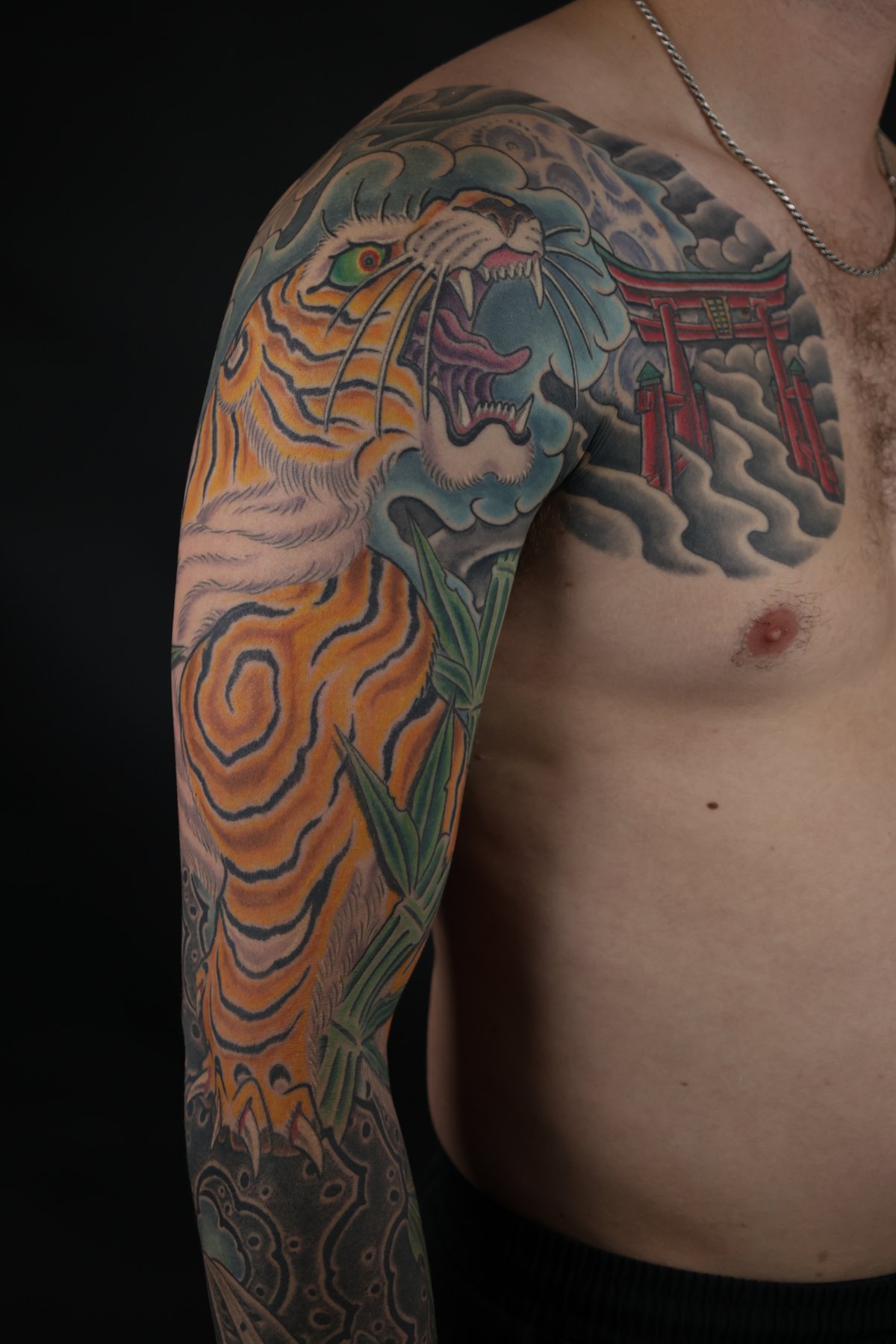
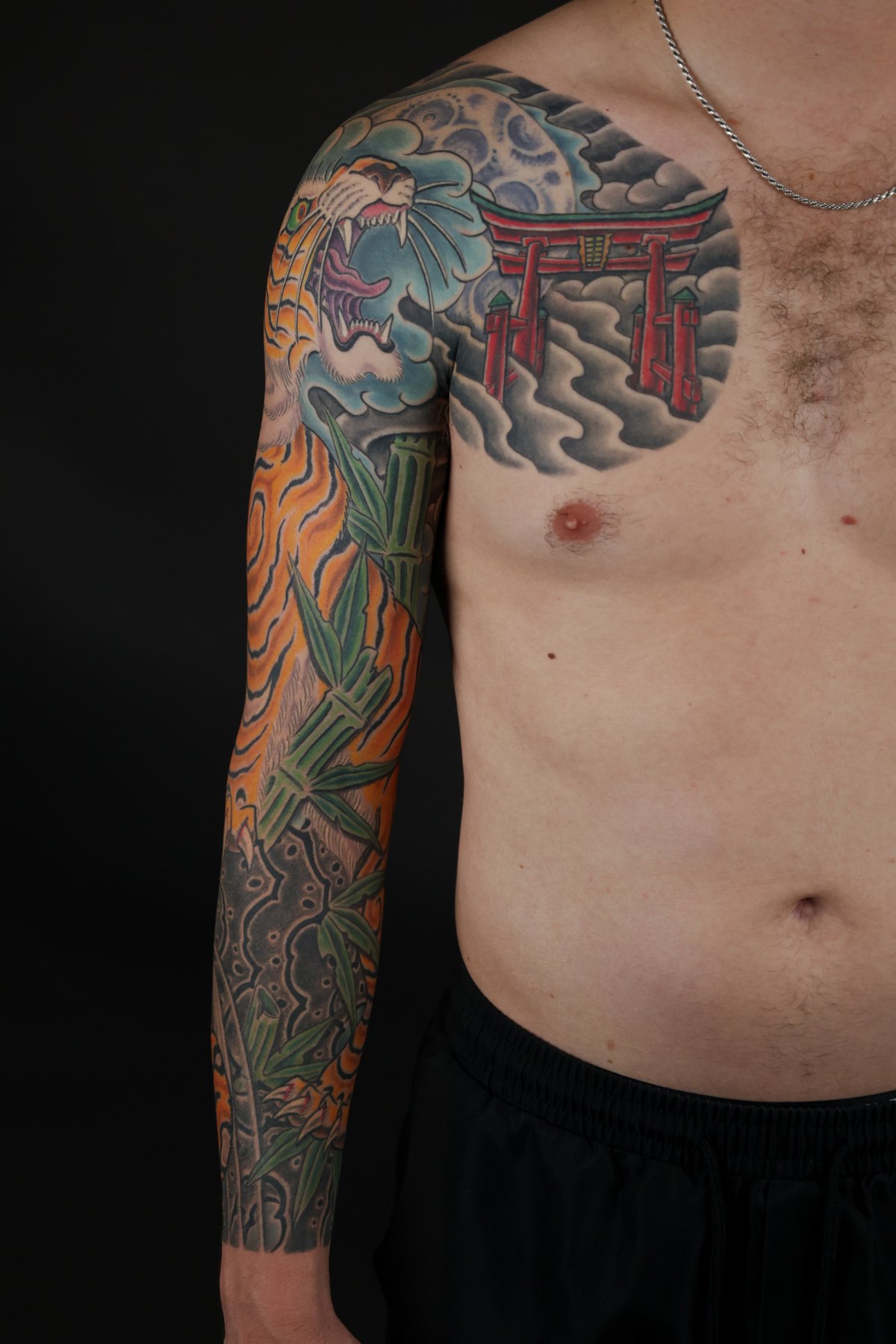
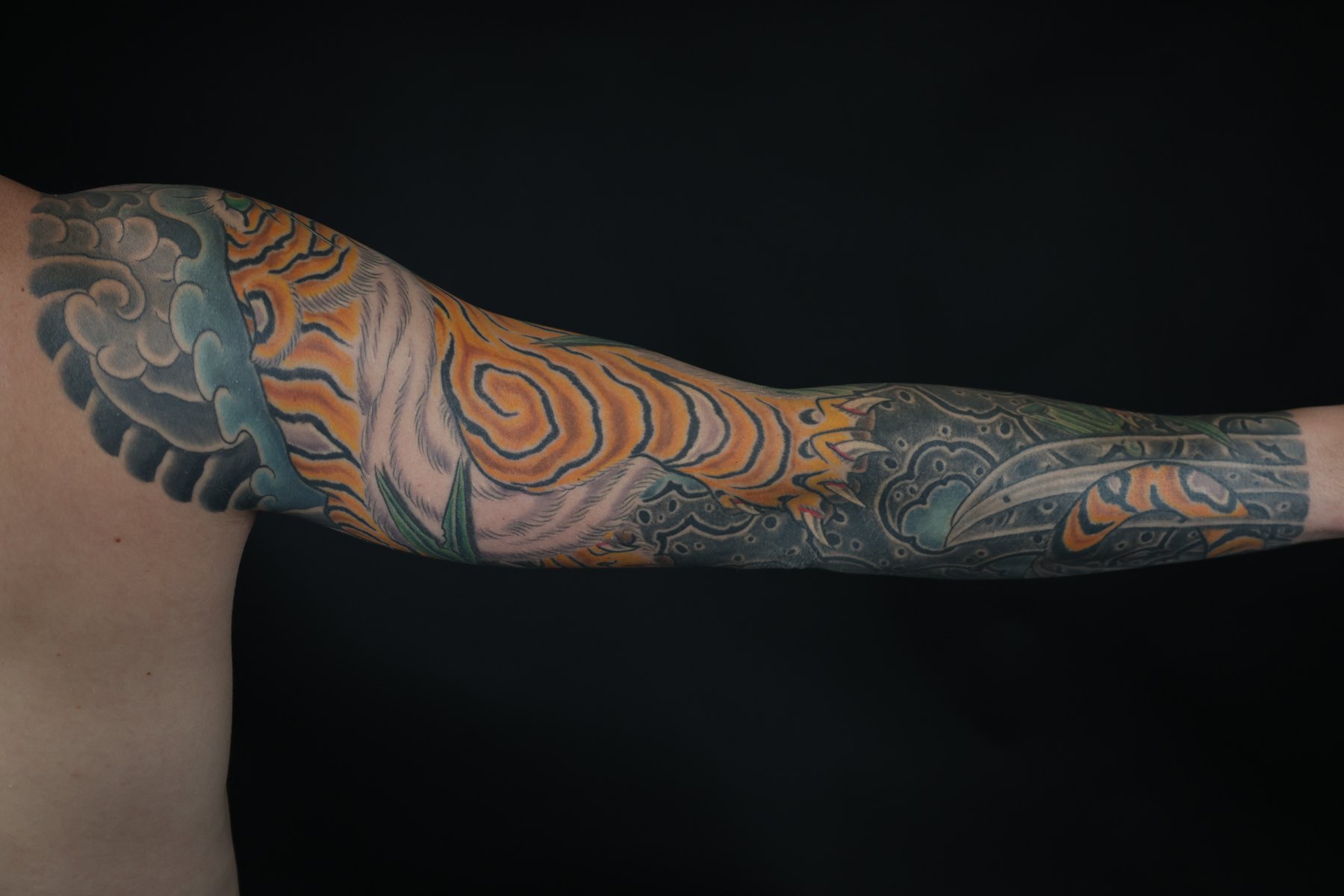
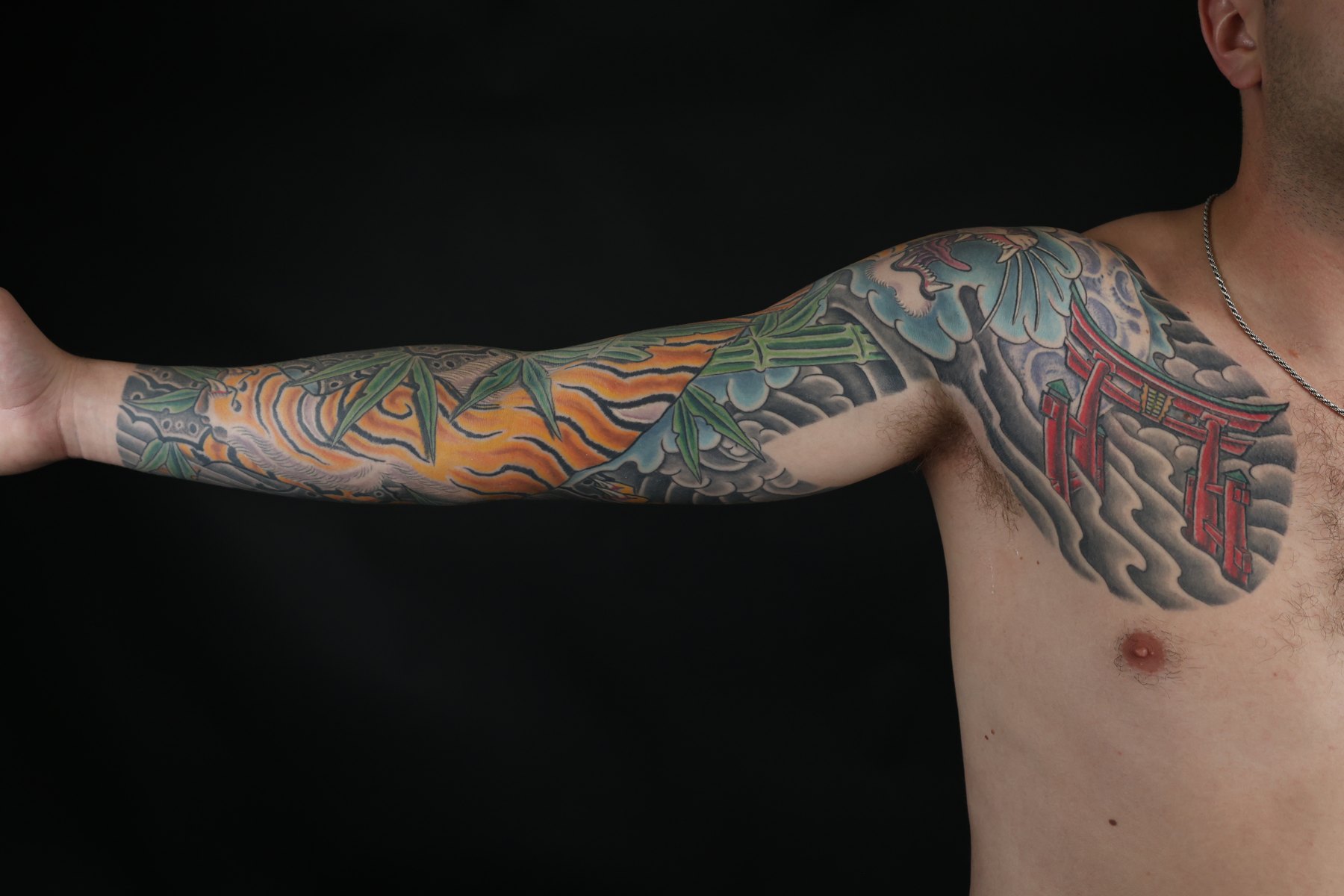
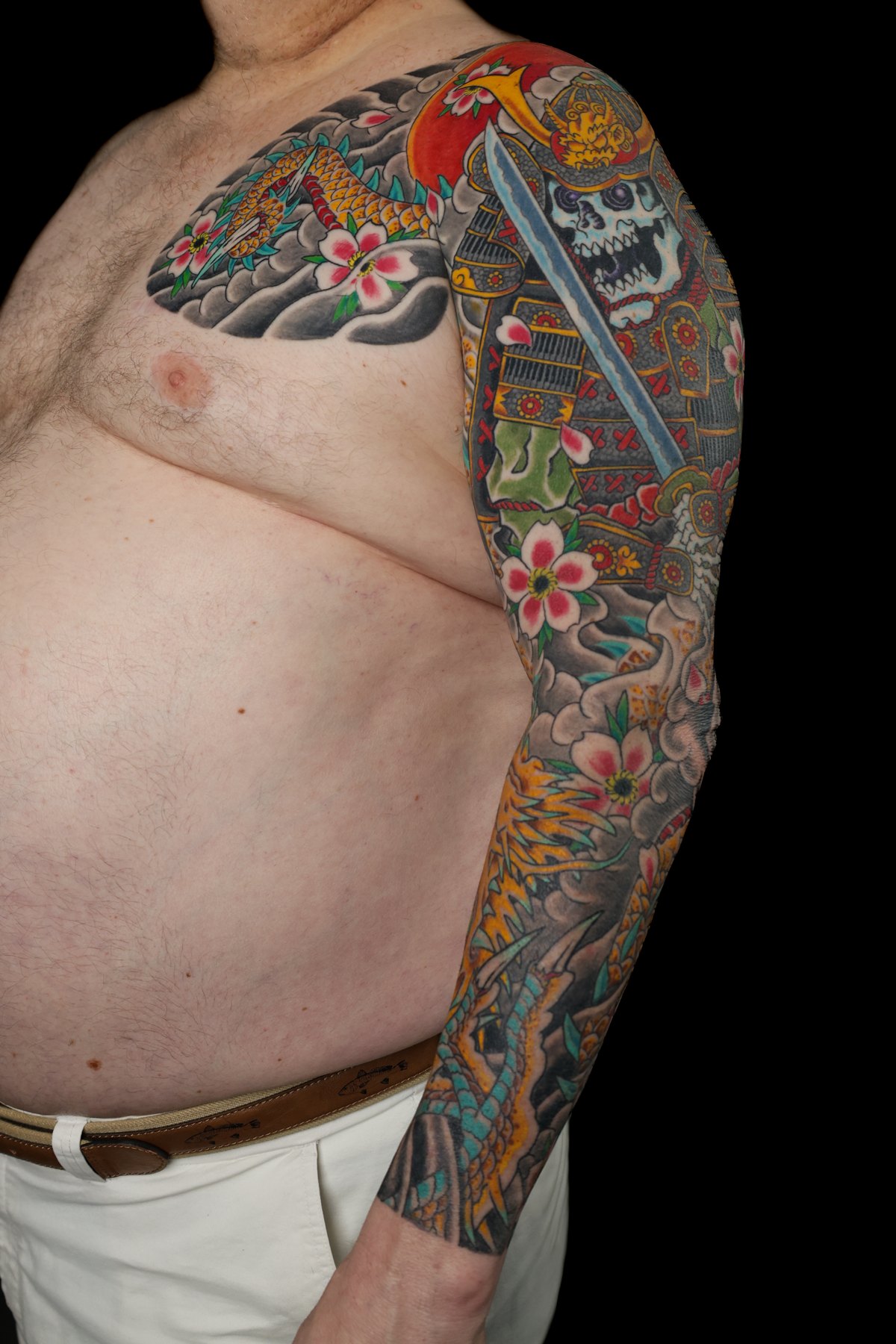
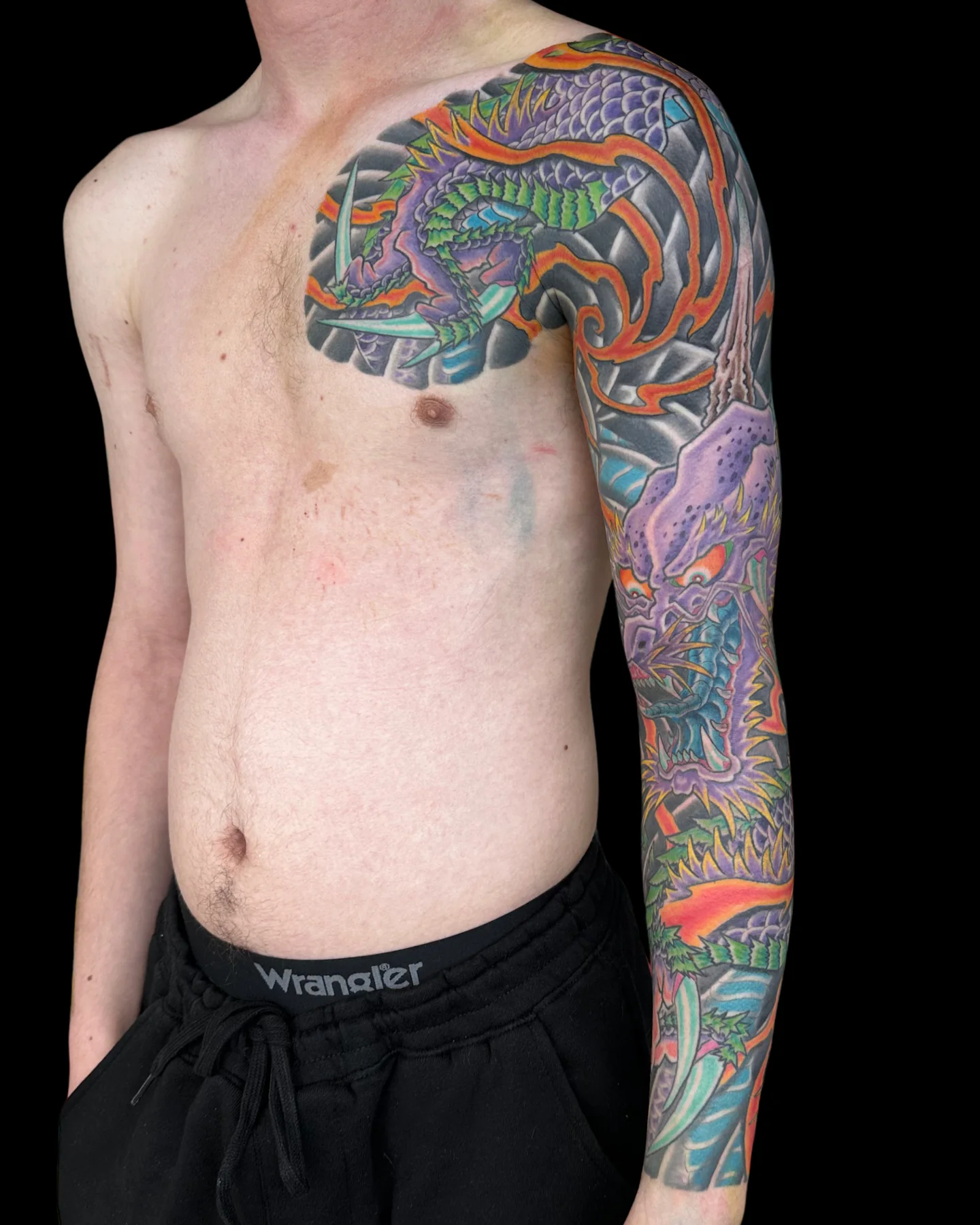
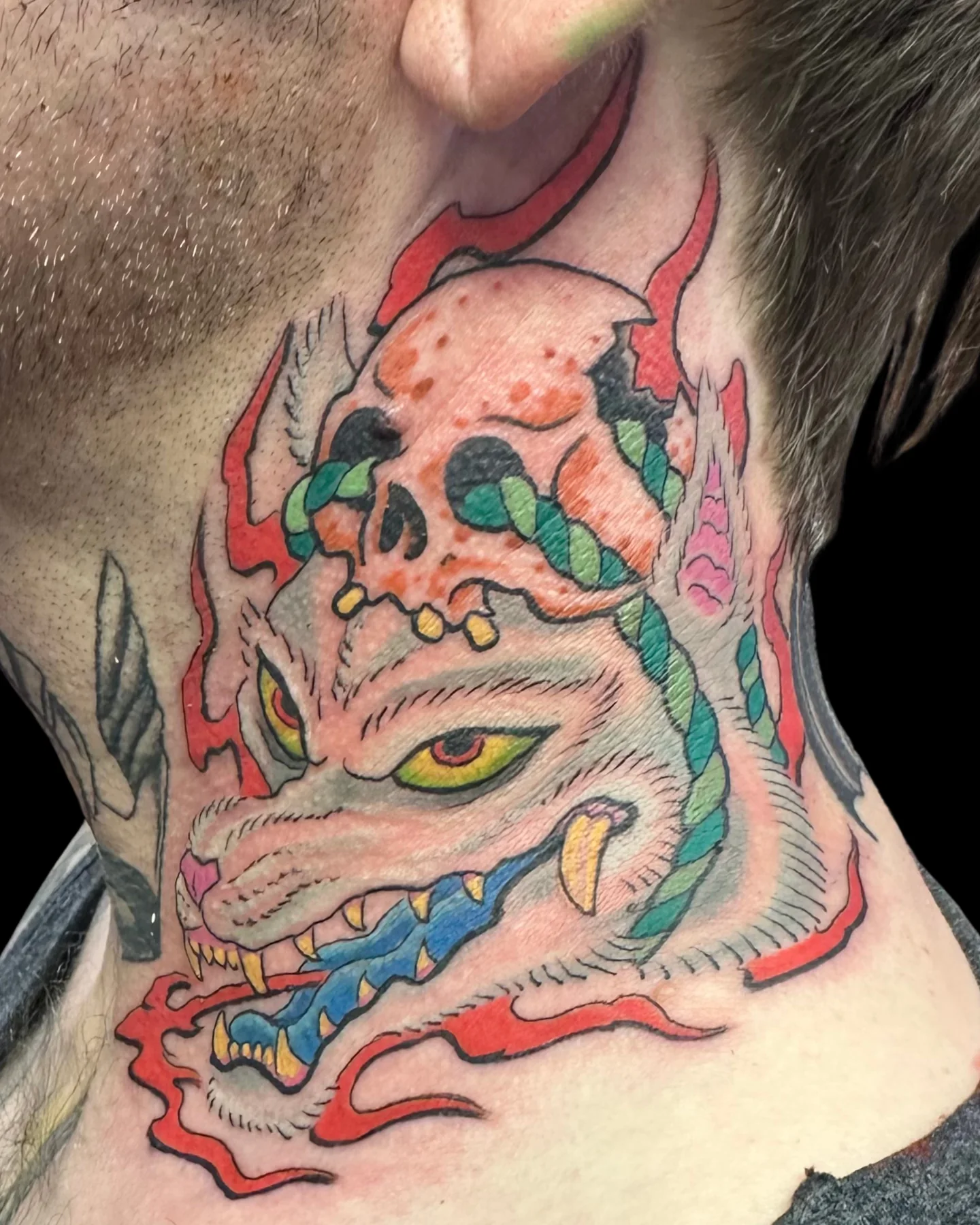
Japanese tattooing is known for imagery that works as part of a larger composition. A dragon, koi or flower is considered alongside the space around it, the direction it faces and the way the design moves over the body. Waves, clouds and other background elements can help connect the subjects. Rather than treating a sleeve as a stack of unrelated pictures, start by thinking about the overall movement you want.
Choose imagery with intention
Dragons, koi, tigers, masks and flowers are familiar starting points, but they are not interchangeable decorations. Motifs can carry cultural associations and stories; their meaning also depends on context and the wearer’s intentions. Tell your artist what attracts you to an image and whether symbolism matters to the project. If you want a traditional approach, discuss appropriate combinations and seasonal elements rather than assembling a design from unrelated search results.
Plan sleeves and back pieces from the outside in
For an arm or leg project, consider the full length and how the design will meet the shoulder, wrist or ankle. A back piece needs a clear main image and a plan for its edges. Bring photos that show the whole placement, including existing tattoos. A larger composition may be completed in stages, but agreeing on the overall direction first helps keep those stages connected. Discuss how far you want the project to extend before committing to a small isolated section.
Explore Japanese work by Element artists
Start with Jedidia Reid for Japanese and large-scale color work, and explore Angel Serda’s portfolio for another view of bold Japanese imagery. The artist links beneath our gallery connect each example with its maker. If you are exploring a more individually interpreted direction, compare Eurojap and Texas Wild Style with the pieces shown here.
Your questions, answered
Do I need a full sleeve to get a Japanese tattoo?
No. A single subject can be a starting point. Let the artist know if you might expand it later, because the orientation, background and edges can affect that future composition.
Does Japanese style mean hand-poked tattooing?
No. A visual style and an application method are different things. Do not assume a particular technique is offered because a portfolio includes Japanese imagery; ask the artist directly.
How do I choose between color and black and grey?
Bring examples of both and identify what appeals to you. The main image, background and contrast should work together. Your artist can discuss a palette in the context of your placement and the rest of your tattoos.